










Breaking News
 Food Shortages In 2027? The ICC Warns That Global Food Prices Could Rise By Close To 70%
 Interview 2039 - The "Rogue AI" Psyop on the IMA Roundtable
 Federal Survey Of 21,990 Kids Ties COVID Shots To Autism, ADHD
 AI Geniuses Are Decidedly Not Policy And Economic Geniuses
Top Tech News
 SHOCK CASE REPORT: Advanced Alzheimer's Patient Regains Speech, Memory, Mobility...
 Most artificial limbs rely on silicone or plastic to mimic human hands.
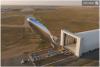 Flying cell tower beams phone signal to Japan from 10 miles up
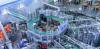 Chinese Commercial Reactor Achieves Nuclear Fusion with Clean Hydrogen-Boron Fuel
 Med Beds Just Took a MASSIVE Step Forward, Healing People in Days!
 Palmer Luckey: Autonomous Weapons Are Ancient and Why Anduril Won't Build Humanoids | EP #295
 A laser just photographed objects through six feet of concrete
 Elon Musk's Next-Gen Motor Destroy Entire EV Industry
 China's disputed satellite refueling heralds new space war era
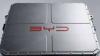 BYD Will Put Solid-State Batteries In An EV Next Year: Executive



Shade-Resistant Solar Cells Retain 97% Efficiency After 2,000 Hours of Testing
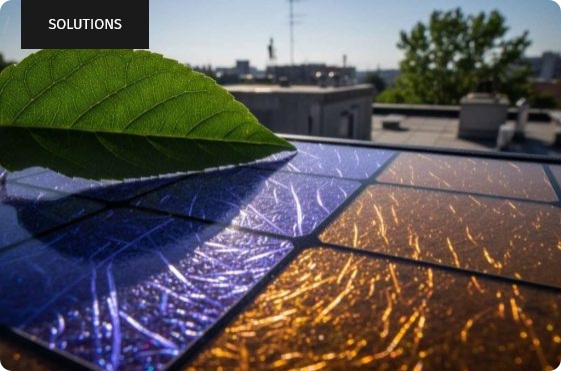
realResearchers have developed solar cells that retain 97% of their efficiency under shaded conditions after 2,000 hours of continuous testing, according to a report. The achievement represents a step forward in addressing a long-standing limitation of photovoltaic panels, the study stated.
The cells incorporate a custom bypass architecture and advanced perovskite-silicon tandem layers designed to minimize power loss from partial shading. Conventional solar panels experience significant efficiency drops when even a small portion is shaded, but the new design reroutes current through unaffected cells, the researchers said.
Technology and Mechanism
The challenge of shade has long plagued solar panel performance. As noted in "The Complete Idiot's Guide to Renewable Energy for Your Home," rooftops are popular for solar panels because they are the easiest place to get direct daily sunlight without obstructions, but towering trees or neighboring structures can create shading problems through overhanging branches [1]. In conventional installations, even partial shade can cause a disproportionate loss in power output because shaded cells act as resistors, forcing current to bypass entire strings of cells.