










Breaking News
 General Flynn sends a note to President Trump about the hacks of CIA, FBI and the election
 Iran's IRGC Says It Targeted US Bases in Bahrain With Drone and Missile Attacks
 NATO Conducted A Cyberattack Exercise Called "Crossed Swords" Just Days Before Major...
 $21,500 pickup plans to fix the American truck problem
Top Tech News
 Smart Dust
 Artificial Intelligence Could Transform Bank Runs From Hours-Long Crises...
 We Can't Put AI Back in the Box… So We Must Make It Serve Pro-Human Interests
 Dubai Just Finished the World's First Permanent Air Taxi Route: Airport to the Marina in Under 1
 Doroni Aerospace Raises More than $60m for H1?X Development
 After 13 Years Battling Cancer, a 61-Year-Old Brazilian Man Achieved Complete Remission...
 Extraterrestrial habitats may rise via Legos of laser-fused moon dust
 Battery-only 19-seater puts China in the electric airliner race
 Dream Chaser space plane gets landing approval for debut mission in 2027
 SpaceX Just Caught Starship on Its FIRST Attempt!



Seven Down, Three To Go: America's Microreactors Keep Going Critical
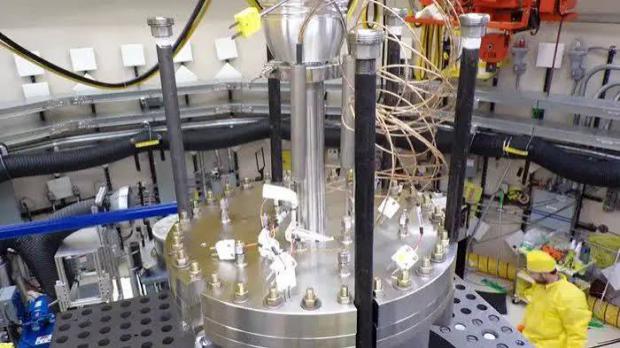
While most people referred to the July goal as a fantasy, the industry not only exceeded the goal with four reactors achieving criticality by the date, but 2026 now stands at a total of seven new microreactor designs splitting uranium atoms within their cores.
How it started
DOE picked 11 projects from 10 companies for its Reactor Pilot Program on Aug. 12, 2025. The companies signed up to pay for everything themselves to test under DOE authorization instead of an NRC license.
Less than ten months later, Antares Nuclear's Mark-0 went critical at Idaho National Laboratory (INL) on June 4. Energy Secretary Chris Wright called it the first new privately developed non-light-water reactor to reach criticality in America in more than four decades.
The rest came fast.
"Nine months ago, this was an empty site," Valar Atomics CEO Isaiah Taylor said after Ward 250 went critical in Utah on June 18.
Deployable Energy, which DOE only picked in April for the pilot program's successor, the Nuclear Energy Launch Pad, took its Unity reactor critical on June 30. Aalo Atomics followed at 12:19 a.m. on July 4, about ten months after breaking ground.
The Fourth of July was just the beginning
As we noted at the time, the goal was met with days to spare. Oklo's Groves-1 isotope test reactor in Lockhart, Texas, made it five on Aug. 5, less than a year after construction started.
The DOE's pilot programs accounted for five, but the other two came out of the National Criticality Experiments Research Center (NCERC) in Nevada.
One of them actually beat everybody. Los Alamos National Laboratory (LANL) took its ZiaCore microreactor experiment critical over the course of four weeks in April and May, ahead of Antares, then didn't announce it until July 30.