










Breaking News
 Got Hard Assets? UBS Says "Position For A Commodity Upcycle" As Global Scarcity Emerges
 Moscow Warns It Could Target British Military Facilities In Unprecedented Statement
 Why Food-Based Formats Change Behavior
 PayPal Crashes After Advent, Stripe Abandon $50 Billion Takeover Bid
Top Tech News
 Singapore is experimenting with biological computing using living human neurons...
 It's Happening - Europe is Building an Impossible Fusion Reactor
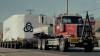 Portable 1MW Kaleidos Microreactor Secures Critical Nuclear Fuel Deal Through 2030s
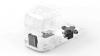 This New All-In-One Range Extender Is Ready To Go Into Any Electric Truck
 Aptera Reveals The Secret To Building Its Solar EV: China
 High-voltage sodium home battery emerges as affordable rooftop solar solution
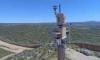 Peter Thiel-Funded Company Anduril to Triple the Number of Autonomous Surveillance...
 China has released Origin Pilot, claimed to be the world's first open-source operating system...
 ShieldAI XBAT Drone Fighters Can Give A Fighter Drone Wing to Every US Destroyer
 Brain organoids, kept alive more than five years, matured like human brains



Independent Journalist Nick Shirley Leaves New York Times Reporter SPEECHLESS After She Tries...
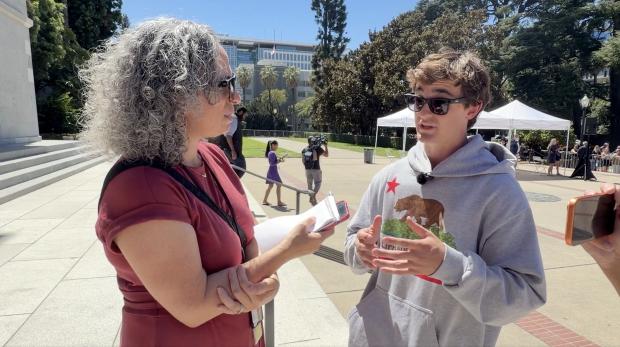
Independent journalist Nick Shirley turned the tables on a New York Times reporter who repeatedly pushed the Democrat defense of California's so-called "Stop Nick Shirley Act."
Independent journalist Nick Shirley, the 24-year-old YouTuber whose viral reporting on empty Somali-run "learing centers" in Minnesota and hospice schemes in California helped blow open a national fraud scandal, was interviewed by NYT reporter Laurel Rosenhall outside the State Capitol after a rally against Assembly Bill 2624.
Rosenhall is The Times' Sacramento-based California politics correspondent. She showed up with a notepad. Shirley showed up with a camera, a "Califraudia Republic" hoodie, and a simple question the paper of record could not answer: why is California writing a law that protects the people spending public money instead of the people exposing how that money disappears?
Shirley posted the clip Thursday with a caption that said it all:
"Here is the New York Times realizing they are advocating for a law that would effect journalism and fraud from being exposed."
Rosenhall starts in defense mode. According to her, lawmakers maintain that the bill was already being developed before Shirley traveled to California.
Shirley immediately shot back: "Not true."
"Because I announced on January 31 that I was coming to California," Shirley explained. "I had already filmed the videos. The word had already gotten out that I filmed inside these immigration support service providers, and then they created the bill before I published the video."
Official legislative records show Democrat Assemblywoman Mia Bonta introduced AB 2624 on February 20, approximately three weeks after Shirley says he publicly announced his California investigation. Bonta is married to California Attorney General Rob Bonta.
Rosenhall continued pressing the Democrat talking point, telling Shirley that immigration-service providers claim they had experienced problems "for quite a long time" and were supposedly unaware of his work when they decided the legislation was necessary.
"It's a lie, quite frankly," Shirley responded.
Shirley argued that California already has laws against doxxing and threatening people and warned that AB 2624 creates a special protected class for virtually anyone associated with an immigration-service organization.
"There's no need for this bill," Shirley said. "They're making a protected class by specifically saying immigration support service providers."
The enacted legislation defines "immigration support services" broadly to include legal representation, advocacy, case management, humanitarian relief, referrals, translation, counseling, and healthcare.
Even more troubling, the law's definition of a protected provider includes a person who "provides, assists in providing, or receives" those services.