










Breaking News
 Watch: Convention Crowd Symbolically Anoints JD Vance for 2028 with Chant
 Appeals Court Won't Allow Trump Admin To Implement New Rules For Mail-In Voting
 The Cooldown Is Officially LOCKED In...
 9/11: The Predatory Perps & Their Perfidious Plan
Top Tech News
 Freezable titanium plate keeps your cooler chilled way longer than ice packs
 Review: Affordable thermal device is made for discovering life outdoors
 AI Whistleblower Tells Tucker How AI Could Kill All Humans by 2040
 You Hate Flock? Well There's More...
 Will Spiking Diesel Prices Drive Autonomous Trucking?
 Chinese Concept Video Imagines the Future of Warfare
 OPTIMUS CONFIRMED: 15,000 Bots This Year -- Tesla to $3,000
 What is Going On With Robotaxi and Cybercab? Here Are All the Answers
 Floating data center would provide water and electricity to 32,000 homes
 OpenAI Cuts Off Elon's Cursor, Humanity's First Star Probe, and Trump's Nuclear Mars Shi



Appeals Court Won't Allow Trump Admin To Implement New Rules For Mail-In Voting
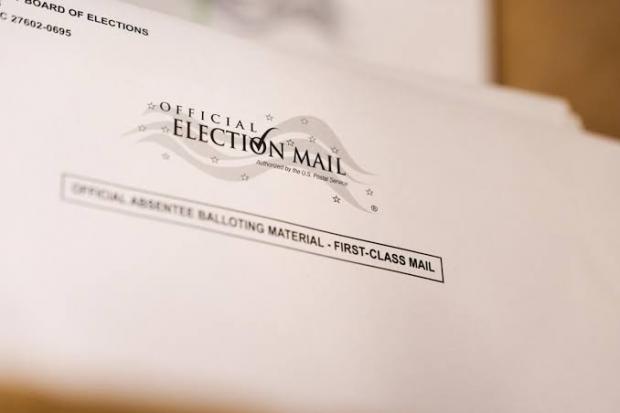
The Supreme Court is currently considering a similar request.
A three-judge panel of the U.S. Court of Appeals for the First Circuit declined to pause an injunction issued on Sept. 4 by Judge Indira Talwani of the U.S. District Court for the District of Massachusetts, which extended a temporary restraining order that she granted on Aug. 27. The injunction halted key parts of the Postal Service's final rule.
The injunction applies to the Nov. 3 elections and any federal elections that take place before then.
The injunction blocks the mandatory parts of the Postal Service's final rule published on Aug. 26 that implements Section 3 of President Donald Trump's executive order 14399. That provision would assign federal agencies a larger role in who receives a mailed ballot and how those ballots are processed by the USPS.
As Matthew Vadum reporets for The Epoch Times, the Trump administration previously said the executive order would help to keep federal elections honest. The Department of Justice argued that the USPS is imposing mailpiece design and data standards under its general authority to regulate the mail, not deciding who is eligible to vote; states are still free to set voter lists and count ballots.
Talwani had said the postal rule could disenfranchise voters, was probably unlawful, and likely violated the U.S. Constitution, which gives states authority to run federal elections taking place within their borders. The judge previously said the postal agency presented no evidence of fraudulent mail-in voting that would justify the new Postal Service rule.
Talwani held that the USPS lacked authority to enforce the rule, and that, as election officials have said, given existing time constraints, complying with the rule for the midterms was "likely impossible."
Talwani said Congress never agreed to delegate its powers under the Constitution's elections clause to the USPS, so the rule "clashes with Congress's statutory scheme, and is unconstitutional where it intrudes not only on ... [those] powers but also that power left to the States."
The judge added that even a small glitch in the new system would be problematic and could mean that ballots never go out, that eligible voters would almost certainly lose the chance to vote by mail, and that the disenfranchisement of plaintiff groups such as the League of Women Voters of Massachusetts was "practically inevitable."
Advocacy groups and a coalition of Democrat-led states had sued to block parts of the rule, arguing that implementation would lead to voter disenfranchisement. Republican states intervened in support of the federal government, arguing that the rule would promote election integrity.