










Breaking News
 Musk's Starlink Is Building An Orbital Bypass As Undersea Cable Sabotage Threats Mount
 Ford V8 crate engine brings unprecedented power to car of your choice
 When Trust becomes a Weapon
 The Essential Survival Guide to Living with Inflation
Top Tech News
 The Greatest Theft in Human History
 3D-Printed Tungsten Survives 74 Fusion Plasma Discharges, Advancing the Engineering...
 Dude turns a $23 used smartphone into the 4G brain of an RC aircraft.
 China's World-Beating Supercar Just Hit 312 MPH
 Pentagon Delivers 25,000+ Drones And Counter-Drone Systems To CENTCOM In A "Massive Surge"
 Prism puts an eye-controlled Linux computer on your face
 Remember Yesterday: AI For Today and Tomorrow
 Robot Mowers Invade America's Golf Courses, Putting Groundskeepers On Notice
 Monstrous 13-foot mecha craves the dangerous jobs humans avoid
 Virgin Galactic's new rocket plane revives its bid for a space airline



Musk's Starlink Is Building An Orbital Bypass As Undersea Cable Sabotage Threats Mount
On Friday, the Financial Times, citing maritime intelligence firm Windward, reported that several Iran-linked vessels slowed or lingered over cable routes in the Gulf of Oman as cable-cutting threats rise. For Gulf-allied states, the challenge is both to protect the cables from sabotage and to keep data centers humming amid Iranian drone threats.
It's not just cable-cutting threats in the Gulf. Remember in 2024 when Baltic undersea cables were severed between Finland and Germany, causing weeks of "disruption."
There must be a solution to cable sabotage that could bring parts of the internet down for days, if not weeks, and that solution might be Elon Musk's Starlink.
Musk joined Ron Baron of Baron Capital on Friday afternoon to discuss several topics, including Starlink buildout and bandwidth, SpaceX Starship launches, the mega AI-chip plant called Terafab, and, of course, with Democrats set to control Congress, the future of orbital compute.
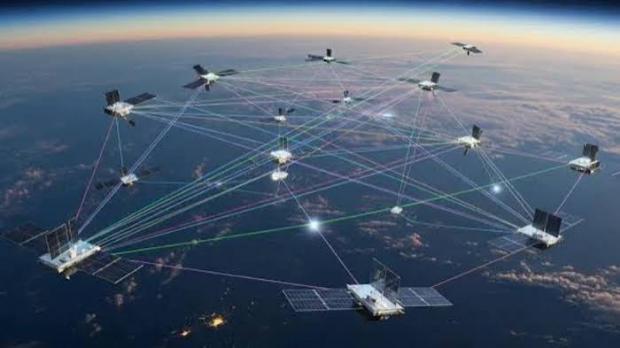
Keeping our focus on what could be the best solution to undersea telecom cables. Well, Musk told Ron: "Starlink version 4 will have 10x the capability of V3 (which itself is 10x better than V2), especially with the long-distance laser links. Our next-gen laser links will be 10-terabits per second. 100x better. And we'll put 10 of them on."
The clip of Musk and Baron was shared on X by Tesla investor Sawyer Merritt, in which Musk responded and said, "100 lasers per satellite, each operating above 10 Tb/s, with over 100k satellites should be able to outcompete undersea cables," adding, "Speed of light in space is ~40% faster than cable and the path is direct, instead of following the outline of land masses."
In other words, Starlink is building a parallel internet backbone in low Earth orbit that would make it much harder for foreign adversaries to sever critical undersea cables, whether with a ship dragging an anchor, a covert special operations team, or a proxy group. This will certaintly suggest that the next domain of warfare in the 2030s is space.
~100 lasers per satellite, each operating above 10 Tb/s, with over 100k satellites should be able to outcompete undersea cables. Speed of light in space is ~40% faster than cable and the path is direct, instead of following the outline of land masses.
— Elon Musk (@elonmusk) November 6, 2026