










Breaking News
 Dead Simple Apocalypse Power: Build It in an Hour
 Dear Friend of Liberty,
 The American Dream Is Being Crushed: The Cost Of Living Is Spiraling Out Of Control And Millions...
 Accused Charlie Kirk Assassin Tyler Robinson Won't Face A Jury Until 2028
Top Tech News
 Musk's Starlink Is Building An Orbital Bypass As Undersea Cable Sabotage Threats Mount
 A robot just built a structure in space for the first time
 The Greatest Theft in Human History
 3D-Printed Tungsten Survives 74 Fusion Plasma Discharges, Advancing the Engineering...
 Dude turns a $23 used smartphone into the 4G brain of an RC aircraft.
 China's World-Beating Supercar Just Hit 312 MPH
 Pentagon Delivers 25,000+ Drones And Counter-Drone Systems To CENTCOM In A "Massive Surge"
 Prism puts an eye-controlled Linux computer on your face
 Remember Yesterday: AI For Today and Tomorrow
 Robot Mowers Invade America's Golf Courses, Putting Groundskeepers On Notice



America's Nuclear Revival Is Running Into A Fuel Supply Wall
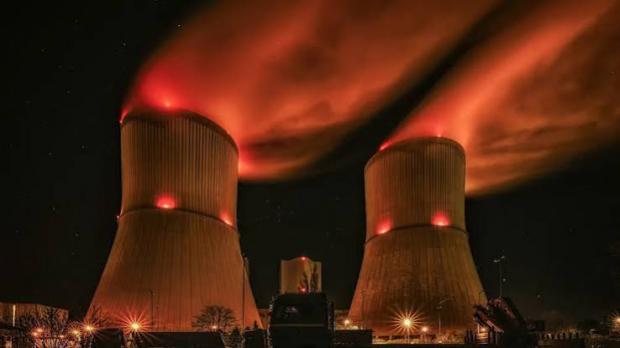
Only five plants worldwide convert uranium at scale. Per the National Interest, the West needs about 44,000 metric tons of feedstock a year and has roughly 34,000 tons of capacity.
Urenco USA's New Mexico plant covers about a third of U.S. enrichment demand and says its expansion is ahead of schedule and on budget, but Russia still holds nearly half of global enrichment capacity.
The United States boasts the largest nuclear power production capacity in the world, but decades of insufficient funding and policy support is now posing an existential threat to the ageing sector. In the past decade, the United States has added just one new nuclear power plant to its fleet, while many more plants are drawing close to being decommissioned, at a time when clean, round-the-clock energy production has never been more needed. The Trump administration has been bullish about restoring the country's nuclear energy sector to its former glory, but growing the country's nuclear energy capacity raises a new problem - where to source the nuclear fuel to power it.
Countries around the world are racing to build up nuclear power capacity as the artificial intelligence boom places unprecedented strain on global power supplies, the war in Iran sustains volatility in oil and gas markets, and decarbonization deadlines draw nearer. As a result, competition over scarce enriched uranium supplies has ramped up at a rapid pace. As a result, U.S. nuclear energy now "faces fuel supply chain vulnerabilities, with tight uranium supplies, geopolitical risks, and rising costs," threatening both existing reactors and advanced reactor development, according to a January report from Stanford Energy.
The geopolitical risks inherent to current nuclear fuel supply chains represent a key and growing concern. The world's nuclear energy fuel supply chains are extremely geopolitically fraught. At present, just five plants in the entire world operate large-scale uranium conversion, and nearly half of global enrichment capacity is controlled by Russia. And if Russia decides to cut the United States off, or vice versa, the alternative could be even worse.
"The West needs more converted uranium than it can process, and cutting off Russian supply could leave its reactors dependent on a single Chinese facility," an article from the National Interest warned earlier this week.
In recent years, leadership in the United States has made considerable inroads toward building up domestic uranium production and conversion capabilities, as it has benefited from being one of the rare forms of energy supported by both the Trump and Biden administrations. Just last month, the National Enrichment Facility, located in Eunice, New Mexico, announced that its planned expansion is ahead of schedule and on budget. Currently, the singular plant converts enough uranium to cover about one-third of U.S. enriched uranium demand, with plans to raise enrichment output by more than 50 percent to reach 7 million separative work units (SWUs) as reactor demand grows.