










Breaking News
 Something Is VERY WRONG With Silver
 What The Hell Is Going On With Beef? | Brooke Rollins #505 | The Way I Heard It
 WARNING: U.S. Mint Is SUSPENDING Silver Dealers
 Trump Just Admitted Unthinkable Dollar Reset (Most Don't Understand the Plan)
Top Tech News
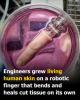 Most artificial limbs rely on silicone or plastic to mimic human hands.
 Flying cell tower beams phone signal to Japan from 10 miles up
 Chinese Commercial Reactor Achieves Nuclear Fusion with Clean Hydrogen-Boron Fuel
 Med Beds Just Took a MASSIVE Step Forward, Healing People in Days!
 Palmer Luckey: Autonomous Weapons Are Ancient and Why Anduril Won't Build Humanoids | EP #295
 A laser just photographed objects through six feet of concrete
 Elon Musk's Next-Gen Motor Destroy Entire EV Industry
 China's disputed satellite refueling heralds new space war era
 BYD Will Put Solid-State Batteries In An EV Next Year: Executive
 FDA-cleared exoskeleton puts spinal-cord patients back on their feet



Volvo's robot refuse collectors ROAR into life

The system uses drones to locate refuse bins and robots to collect and empty them.
For the project, Volvo has collaborated with Chalmers University of Technology, Mälardalen University and Penn State University, all of which are part of its Academic Partner Program. Waste management firm Renova is also involved. The aim is to show how machines can communicate with each other and how, in the future, they will be able "to facilitate everyday life in a large number of areas."
"We predict a future with more automation," says project manager for robot development at the Volvo Group Per-Lage Götvall in a press release. "This project is intended to stimulate our imagination, to test new concepts that may shape transport solutions of the future."