










Breaking News
Trump's War In Iran Is Not Destroying Iran; It Is Destroying AMERICA
 NASA Chief: "We Just Built Antigravity Propulsion!"
 Carl Higbie (NEWSMAX) says LIVE on TV: "The Senate is supposed to vote on the Clarity Act NEXT
 Quantum computing may soon become part of the microscope itself.
Top Tech News
Quantum computing may soon become part of the microscope itself.
 Volkswagen Just Unveiled The Most Efficient EV Ever Tested
 NASA Super Light Solar Sail Project Will Be 12-40 Times Lighter and Faster
 Space Telescope Interferometer to Image Exoplanet Continents
 Twenty-five years of "temporary": how 9/11 built a surveillance state Americans never vote
 I'll Never Buy Another WALMART Battery!
 Shoei GT-Air 3 Smart helmet drops with built-in AR for $1,500
 AI Whistleblower Tells Tucker How AI Could Kill All Humans by 2040
 You Hate Flock? Well There's More...
 Will Spiking Diesel Prices Drive Autonomous Trucking?



Super-tough portable box keeps gadgets safe, dry and charged
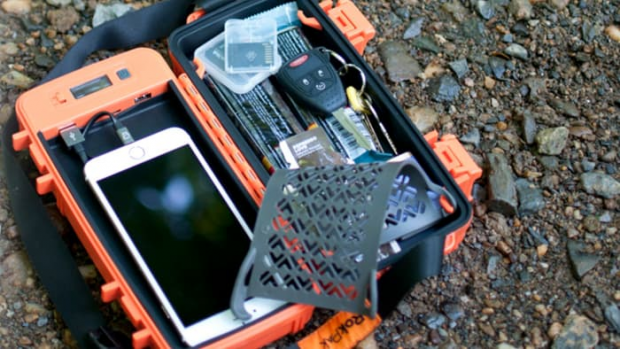
Drops, mud and water tend not to be such good friends of electronics. If you cage them up in the now-being-Kickstarted RokPak though, they'll reportedly be able to take the best that Mother Nature — or your own clumsy hands — has to throw at them.
The RokPak consists first and foremost of a tough waterproof case measuring 9.6 x 5 x 2.8 inches (246 x 128 x 70 millimeters). The case is lined with silicone, which makes a nice soft home for your delicate electronics; the makers told Gizmag that the RokPak can even take a fall from four feet (1.2 m) against a hard surface and still keep things safe. There's a also a silicone net on one side that holds items in place. The case also floats and insulates against extreme heat (temps up to 176°F/80°C) and extreme cold (-4°F/-20°C).
So those are the mechanical specs of the box. What about its electronic profile?