










Breaking News
 U.S. Harvest Under Water: Pre-Scripted Food Crisis Accelerates as Breadbaskets Fail
 Europe is buying relief today by drawing down its protection for winter.
 What the Cornell Rape Allegation Really Tells Us Is that Sexual Morality Is Stone Dead...
 Do "news reports" Have Any Value?
Top Tech News
 Most artificial limbs rely on silicone or plastic to mimic human hands.
 Flying cell tower beams phone signal to Japan from 10 miles up
 Chinese Commercial Reactor Achieves Nuclear Fusion with Clean Hydrogen-Boron Fuel
 Med Beds Just Took a MASSIVE Step Forward, Healing People in Days!
 Palmer Luckey: Autonomous Weapons Are Ancient and Why Anduril Won't Build Humanoids | EP #295
 A laser just photographed objects through six feet of concrete
 Elon Musk's Next-Gen Motor Destroy Entire EV Industry
 China's disputed satellite refueling heralds new space war era
 BYD Will Put Solid-State Batteries In An EV Next Year: Executive
 FDA-cleared exoskeleton puts spinal-cord patients back on their feet



Smartphone spectroscopy kit brings blood test info home
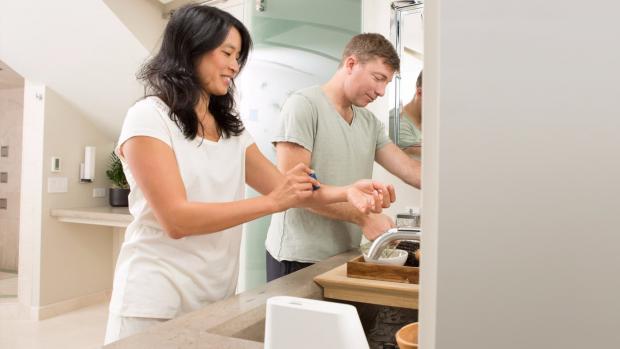
"The idea was: what if we could bring blood chemistry testing directly to the home so that people could use that as a tool to know whether the things that they're doing to maintain a state of health and wellness are really working properly?" explains Messerschmidt. This would make it easier for people to get an understanding of what is going on inside their bodies and track their own health.
Cor isn't the first company to harness smartphones in a bid to make blood test info more readily available. Previously we've seen them used to monitor diabetes, to detect HIV and syphilis markers and to scan for parasitic worms. Like those examples, Cor uses a smartphone in tandem with additional pieces of kit.
The Cor kit comprises a web and smartphone app (initially for iOS, with an Android version planned), a blood reader and single-use cartridges that are used to take blood samples. The cartridges each have a fine needle that takes a surface-level blood sample when pressed against the arm.