










Breaking News
 Something Is VERY WRONG With Silver
 What The Hell Is Going On With Beef? | Brooke Rollins #505 | The Way I Heard It
 WARNING: U.S. Mint Is SUSPENDING Silver Dealers
 Trump Just Admitted Unthinkable Dollar Reset (Most Don't Understand the Plan)
Top Tech News
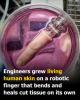 Most artificial limbs rely on silicone or plastic to mimic human hands.
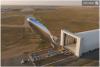 Flying cell tower beams phone signal to Japan from 10 miles up
 Chinese Commercial Reactor Achieves Nuclear Fusion with Clean Hydrogen-Boron Fuel
 Med Beds Just Took a MASSIVE Step Forward, Healing People in Days!
 Palmer Luckey: Autonomous Weapons Are Ancient and Why Anduril Won't Build Humanoids | EP #295
 A laser just photographed objects through six feet of concrete
 Elon Musk's Next-Gen Motor Destroy Entire EV Industry
 China's disputed satellite refueling heralds new space war era
 BYD Will Put Solid-State Batteries In An EV Next Year: Executive
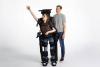 FDA-cleared exoskeleton puts spinal-cord patients back on their feet



Ehang's Passenger Drone Will Begin Real-World Testing
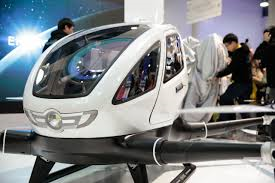
In the bleak desert east of the ocean and west of the mountains, a robot will open up, take a human into its body cavern, and then lift off into the sky. No more than 23 minutes later, the robot will land, and disgorge its human contents. The Ehang 184 is confusingly termed a "passenger drone," and the remotely piloted people-carrying device is now cleared to test in Nevada.
The drone will test under the supervision of the Nevada Institute for Autonomous Systems, and the Ehang 184 joins the growing tech boom in Nevada. The empty desert holds the hope of hyperloops, drone delivery, autonomous trucking, and drone airports. (Nevada is also famously the home of secret military aircraft testing, and there's a distant possibility that the Ehang could be adopted into military use.)
While the market for, say, self-driving trucks or drone deliveries is pretty self-explanatory, who wants a helicopter that can't fly for even a full half hour? The Guardian writes: