










Breaking News
 EXCERPTS: Citigroup Inc. received approval to launch a wholly-owned securities business...
 The Crown Wants It Kept Secret: AG Asks the Federal Court to Seal Information...
 The Supreme Court Just Denied Your Constitutional Rights
 The state is trying to crush the Amish with ruinous penalties.
Top Tech News
 Modular phone promises total privacy at the flick of a switch
 Genetically Engineered War Dogs for 134 Pound Cyborg Dire Wolves Now – Later 600 Pound Wolves
 They're Quietly REPLACING Our Food With THIS… And Nobody Is Talking About It!
 Chicago Opens First "Teacher-Free" AI School as Global Push Accelerates
 Solar Panels Are Doing Something Nobody Expected
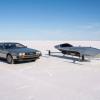 DeLorean climbs skyward to race electric flying cars
 Atari's 800XL returns with a keyboard, cartridges and BASIC
 Bioinspired robot airdrops into remote waters via morphing wing-sail
 Anduril interceptor adapts to emerging threats via swappable stages
 I Built a Website to Expose Solar and Battery Scams


Beyond Dome City colonies to Shell Worlds or Paraterraforming...
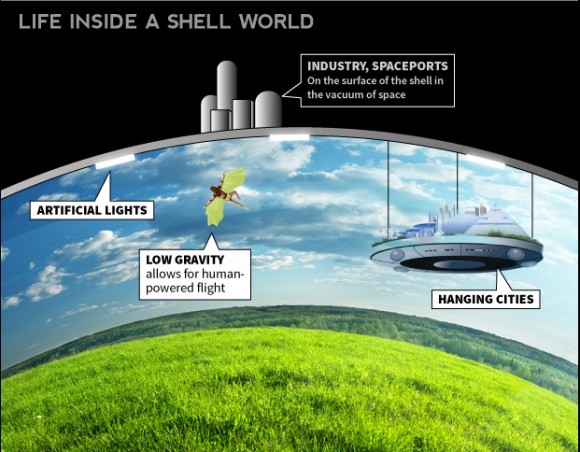
There is also strong material (EFTE) which is 100 times lighter than glass and which can lower costs by 4 times. Very large geodesic domes could cover several square miles on Mars. Mars has one third of the gravity on Earth, so dome cities could be very large there.
A large "shell" can be used to encase an alien world (asteroid or moon), keeping its atmosphere contained long enough for long-term changes to take root.
There is also the concepts where a usable part of a planet is enclosed in an dome in order to transform its environment, which is known as "paraterraforming".
Paraterraforming - The worldhouse concept
The 'worldhouse' concept of paraterraforming can be formulated within the existing boundaries of technological knowledge and can provide a quasi-unconstrained global habitable environment at significantly lower levels of materials requirement and economic cost. Construction can proceed on a modular basis. A coarse-grained assessment of the possibilities of paraterraforming Mars is presented. It is suggested that the establishment of a fully habitable worldhouse environment on the planet Mercury would be a much less difficult undertaking than taerraforming Venus and could be economically important for the human exploitation of the solar system.