










Breaking News
 Watch: Convention Crowd Symbolically Anoints JD Vance for 2028 with Chant
 Appeals Court Won't Allow Trump Admin To Implement New Rules For Mail-In Voting
 The Cooldown Is Officially LOCKED In...
 9/11: The Predatory Perps & Their Perfidious Plan
Top Tech News
 Freezable titanium plate keeps your cooler chilled way longer than ice packs
 Review: Affordable thermal device is made for discovering life outdoors
 AI Whistleblower Tells Tucker How AI Could Kill All Humans by 2040
 You Hate Flock? Well There's More...
 Will Spiking Diesel Prices Drive Autonomous Trucking?
 Chinese Concept Video Imagines the Future of Warfare
 OPTIMUS CONFIRMED: 15,000 Bots This Year -- Tesla to $3,000
 What is Going On With Robotaxi and Cybercab? Here Are All the Answers
 Floating data center would provide water and electricity to 32,000 homes
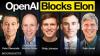 OpenAI Cuts Off Elon's Cursor, Humanity's First Star Probe, and Trump's Nuclear Mars Shi



Google, Microsoft, labs and start-ups will create universal quantum computers in 2017...

Google started working on a form of quantum computing that harnesses superconductivity in 2014. In 2017 or 2018 Google hopes to perform a computation that is beyond even the most powerful 'classical' supercomputers — an elusive milestone known as quantum supremacy. Its rival, Microsoft, is betting on an intriguing but unproven concept, topological quantum computing, and hopes to perform a first demonstration of the technology.
The quantum-computing start-up scene is also heating up. Christopher Monroe, co-founded the start-up IonQ in 2015, plans to begin hiring in earnest this year.
Physicist Robert Schoelkopf at Yale University in New Haven, Connecticut, who co-founded the start-up Quantum Circuits, and former IBM applied physicist Chad Rigetti, who set up Rigetti in Berkeley, California, say they expect to reach crucial technical milestones soon.
The largest trapped ion quantum computer with 20 qubits is being tested in an academic lab led by Rainer Blatt at the University of Innsbruck in Austria.