










Breaking News
Trump's War In Iran Is Not Destroying Iran; It Is Destroying AMERICA
 NASA Chief: "We Just Built Antigravity Propulsion!"
 Carl Higbie (NEWSMAX) says LIVE on TV: "The Senate is supposed to vote on the Clarity Act NEXT
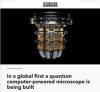 Quantum computing may soon become part of the microscope itself.
Top Tech News
Quantum computing may soon become part of the microscope itself.
 Volkswagen Just Unveiled The Most Efficient EV Ever Tested
 NASA Super Light Solar Sail Project Will Be 12-40 Times Lighter and Faster
 Space Telescope Interferometer to Image Exoplanet Continents
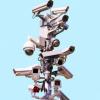 Twenty-five years of "temporary": how 9/11 built a surveillance state Americans never vote
 I'll Never Buy Another WALMART Battery!
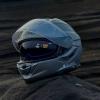 Shoei GT-Air 3 Smart helmet drops with built-in AR for $1,500
 AI Whistleblower Tells Tucker How AI Could Kill All Humans by 2040
 You Hate Flock? Well There's More...
 Will Spiking Diesel Prices Drive Autonomous Trucking?



Quantum Computing Is Real, and D-Wave Just Open-Sourced It
Now D-Wave, the Canadian company behind the quantum computer that Google and NASA have been testing since 2013, wants to make quantum computing a bit easier through the power of open source software.
Traditional computers store information in "bits," which can represent either a "1" or a "0." Quantum computing takes advantage of quantum particles in a strange state called "superposition," meaning that the particle is spinning in two directions at once. Researchers have learned to take advantage of these particles to create what they call "qubits," which can represent both a 1 and a 0 at the same time. By stringing qubits together, companies like D-Wave hope to create computers that are exponentially faster than today's machines.
IBM demonstrated a working quantum computer in 2000 and continues to improve on its technology. Google is working on its own quantum computer and also teamed up with NASA to test D-Wave's system in 2013. Lockheed Martin and the Los Alamos National Laboratory are also working with D-Wave machines.