










Breaking News
 This is the future we shall bring into being
 Elon Musk's Vision For The Future Looks Like A Movie
 Phosphorus Munitions Fired by Israel Burn Groves, Orchards in Southern Lebanon
 Iran's IRGC Warns It Will Expand 'Geography of the War' If the US Attacks Again
Top Tech News
 BEYOND THE MOON: NASA plans a nuclear-powered fleet to push DEEPER into space
 Big Oil Backs Mazama's $135 Million Bet On Superhot Geothermal
 Quantum compass takes flight on Northrop's Lumberjack drone
 Terrifying AI Behavior Even Its Creators Couldn't Explain
 WW3 Near-Miss? AI Hallucinated Nuclear Weapons Components Aboard Chinese Vessel Bound For Iran
 Stripe Is Building the Toll Road for the Machine Economy
 Toyota Dakar hopeful swaps twin-turbo V6 for hydrogen fuel cells
 4-min turbo-inflatable cubic camp castle is now available in the USA
 Researchers Used Claude To Hack OpenAI Employee Accounts
 Chinese Scientists Develop New Oil Refining Method That Cuts Energy Use by 90%



Airbus working on flying cars, flying buses, ridesharing flying vehicles and drone...
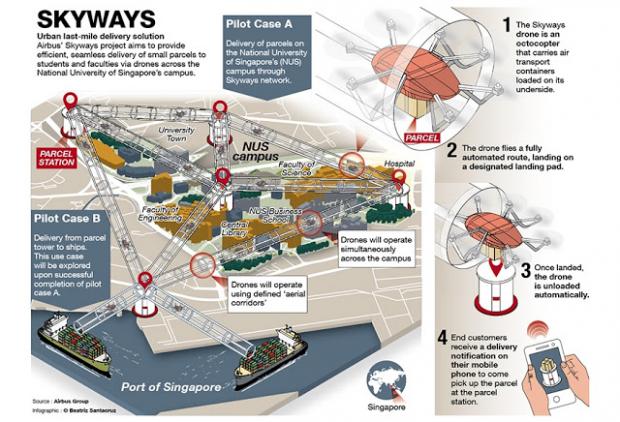
Airbus Group plans to test a prototype for a self-piloted flying car as a way of avoiding gridlock on city roads by the end of the year, the aerospace group's chief executive said on Monday.
Airbus last year formed a division called Urban Air Mobility that is exploring concepts such as a vehicle to transport individuals or a helicopter-style vehicle that can carry multiple riders. The aim would be for people to book the vehicle using an app, similar to car-sharing schemes.
"One hundred years ago, urban transport went underground, now we have the technological wherewithal to go above ground," Airbus CEO Tom Enders told the DLD digital tech conference in Munich, adding he hoped the Airbus could fly a demonstration vehicle for single-person transport by the end of the year.
"We are in an experimentation phase, we take this development very seriously," he said, adding that Airbus recognized such technologies would have to be clean to avoid further polluting congested cities.
He said using the skies could also reduce costs for city infrastructure planners. "With flying, you don't need to pour billions into concrete bridges and roads," he said.