










Breaking News
 Something Is VERY WRONG With Silver
 What The Hell Is Going On With Beef? | Brooke Rollins #505 | The Way I Heard It
 WARNING: U.S. Mint Is SUSPENDING Silver Dealers
 Trump Just Admitted Unthinkable Dollar Reset (Most Don't Understand the Plan)
Top Tech News
 Most artificial limbs rely on silicone or plastic to mimic human hands.
 Flying cell tower beams phone signal to Japan from 10 miles up
 Chinese Commercial Reactor Achieves Nuclear Fusion with Clean Hydrogen-Boron Fuel
 Med Beds Just Took a MASSIVE Step Forward, Healing People in Days!
 Palmer Luckey: Autonomous Weapons Are Ancient and Why Anduril Won't Build Humanoids | EP #295
 A laser just photographed objects through six feet of concrete
 Elon Musk's Next-Gen Motor Destroy Entire EV Industry
 China's disputed satellite refueling heralds new space war era
 BYD Will Put Solid-State Batteries In An EV Next Year: Executive
 FDA-cleared exoskeleton puts spinal-cord patients back on their feet



"Rebar graphene" foam supports 3,000 times its own weight
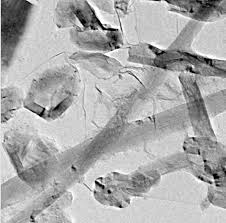
MIT scientists recently developed a 3D version that's 10 times stronger than steel but a fraction of the density, and now a team at Rice University has used carbon nanotubes to reinforce graphene foam. The resulting 3D material can be molded into any shape and supports 3,000 times its own weight before springing back to its original height.
Named for the rebars (reinforcing bars) commonly used to strengthen concrete, Rice's "rebar graphene" is built around carbon nanotubes with several concentric layers. In previous work the team had created three-dimensional graphene foam, and having already used the nanotubes to reinforce regular old 2D graphene, it made sense to combine the two.
"We developed graphene foam, but it wasn't tough enough for the kind of applications we had in mind, so using carbon nanotubes to reinforce it was a natural next step," says James Tour, lead researcher on the study.