










Breaking News
 BEYOND THE MOON: NASA plans a nuclear-powered fleet to push DEEPER into space
 Defense Minister Says Pakistan Will 'Fulfill Our Duty' to Saudi Arabia Amid Attacks from Ans
 Now Even English Villages Want To Leave Britain
 The 'Clancy holdout juror' saga takes another WILD turn…
Top Tech News
 Terrifying AI Behavior Even Its Creators Couldn't Explain
 WW3 Near-Miss? AI Hallucinated Nuclear Weapons Components Aboard Chinese Vessel Bound For Iran
 Stripe Is Building the Toll Road for the Machine Economy
 Toyota Dakar hopeful swaps twin-turbo V6 for hydrogen fuel cells
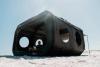 4-min turbo-inflatable cubic camp castle is now available in the USA
 Researchers Used Claude To Hack OpenAI Employee Accounts
 Chinese Scientists Develop New Oil Refining Method That Cuts Energy Use by 90%
 World's smallest CT scanner fits in the palm of your hand
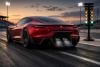 The Tesla Roadster will blow people's minds
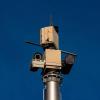 Peter Thiel-Funded Company Anduril to Triple the Number of Autonomous Surveillance Towers...



China to develop satellite-delivery rockets released from airplanes
Air-launched rockets can rapidly replace dysfunctional satellites or, in cases of disaster relief, quickly send up Earth observation satellites to assist in the effort, Li said.
Designers at the academy, which is the main developer of Chinese carrier rockets, have designed a model capable of sending a payload of about 100 kilograms into low Earth orbit and are ready to produce one if the government asks, he said. They plan to design a larger rocket that could carry 200 kg into orbit.
"The Y-20 strategic transport plane will be the carrier of these rockets. The jet will hold a rocket within its fuselage and release it at a certain altitude. The rocket will be ignited after it leaves the plane," Li said.
Large satellites will still have to be put into orbit with conventional rockets, experts said.
Delivery of the Y-20 to the Chinese Air Force began in July. It is China's first domestically developed heavy-lift transport plane and has a maximum takeoff weight of more than 200 metric tons and a maximum payload of about 66 tons, aviation experts said.