










Breaking News
 Brace Yourselves: Serious Trouble Brewing In The Data Center Industry
 Modular phone promises total privacy at the flick of a switch
 THE O'LEARY PLAN TO TAKE THOUSANDS OF ACRES FOR WATER RIGHTS.
 It's Starting: The Fall of Europe
Top Tech News
 Genetically Engineered War Dogs for 134 Pound Cyborg Dire Wolves Now – Later 600 Pound Wolves
 They're Quietly REPLACING Our Food With THIS… And Nobody Is Talking About It!
 Chicago Opens First "Teacher-Free" AI School as Global Push Accelerates
 Solar Panels Are Doing Something Nobody Expected
 DeLorean climbs skyward to race electric flying cars
 Atari's 800XL returns with a keyboard, cartridges and BASIC
 Bioinspired robot airdrops into remote waters via morphing wing-sail
 Anduril interceptor adapts to emerging threats via swappable stages
 I Built a Website to Expose Solar and Battery Scams
 Whistleblower Issues Dire Warning: Rogue AI, Hacking Nuclear Programs...



Study: Potatoes can grow on Mars
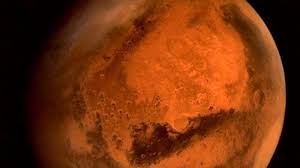
CubeSat indicator experiments prove potatoes can grow on Mars. The findings show potatoes can also grow under extreme conditions on Earth.
Scientists with the International Potato Center created Mars-like growing conditions inside a CubeSat designed by engineers at the University of Engineering and Technology in Lima, Peru. The potato plants inside the experimental box are reportedly thriving.
The box mimics the day-night patterns of Mars, as well as its temperature, air pressure and atmospheric composition. Sensors inside the hermetically-sealed box monitor the progress of the tubers.
"Growing crops under Mars-like conditions is an important phase of this experiment," Julio Valdivia-Silva, a research associate with the SETI Institute, said in a news release. "If the crops can tolerate the extreme conditions that we are exposing them to in our CubeSat, they have a good chance to grow on Mars. We will do several rounds of experiments to find out which potato varieties do best. We want to know what the minimum conditions are that a potato needs to survive."
The genome of the potato plant is dynamic. Its genes boast considerable adaptive potential. Researchers have previously engineered potatoes to survive salty soils and drought conditions.