










Breaking News
 Trump: Houthis 'Don't Want' US In Yemen - So They're Letting Most Red Sea Shipping T
 China's 70% EV Target Deals Another Blow To Oil Demand
 Making The World Great One Nation At A Time
 Florida's Attorney General Sues Netflix For Allegedly Harvesting, Selling Children's Data
Top Tech News
 NASA Super Light Solar Sail Project Will Be 12-40 Times Lighter and Faster
 Space Telescope Interferometer to Image Exoplanet Continents
 Twenty-five years of "temporary": how 9/11 built a surveillance state Americans never vote
 I'll Never Buy Another WALMART Battery!
 Shoei GT-Air 3 Smart helmet drops with built-in AR for $1,500
 Freezable titanium plate keeps your cooler chilled way longer than ice packs
 Review: Affordable thermal device is made for discovering life outdoors
 AI Whistleblower Tells Tucker How AI Could Kill All Humans by 2040
 You Hate Flock? Well There's More...
 Will Spiking Diesel Prices Drive Autonomous Trucking?



Peek inside Blue Origin's capsule for space tourists
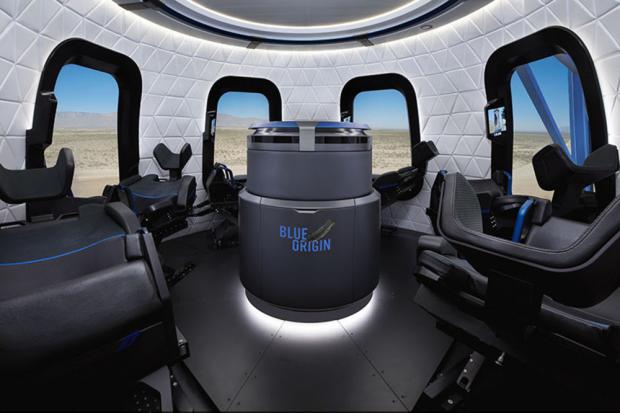
Blue Origin, the private company hoping to carry tourists into space in 2018, has unveiled the interior design for its spacecraft's cabin.
The New Shepard's layout isn't exactly mind-blowing—there's only so much variation that can be crammed into a small, gumdrop-shaped crew capsule. Although the overall shape and size are similar to other astronaut capsules (due to the physical constraints of human spaceflight), the New Shepard spacecraft does have a few notable features.
"Every seat's a window seat," Blue Origin founder Jeff Bezos wrote in an email this morning.
Windows are typically a weak spot on a spacecraft's hull, so SpaceX's Crew Dragon capsule, intended for use by NASA astronauts, contains just a few small windows. But Blue Origin's main selling point for space tourists is the view from space, so its design includes six large windows—"The largest windows ever in space," Bezos notes. The company no doubt spent a lot of money ensuring their strength and safety.