










Breaking News
 Something Is VERY WRONG With Silver
 What The Hell Is Going On With Beef? | Brooke Rollins #505 | The Way I Heard It
 WARNING: U.S. Mint Is SUSPENDING Silver Dealers
 Trump Just Admitted Unthinkable Dollar Reset (Most Don't Understand the Plan)
Top Tech News
 Most artificial limbs rely on silicone or plastic to mimic human hands.
 Flying cell tower beams phone signal to Japan from 10 miles up
 Chinese Commercial Reactor Achieves Nuclear Fusion with Clean Hydrogen-Boron Fuel
 Med Beds Just Took a MASSIVE Step Forward, Healing People in Days!
 Palmer Luckey: Autonomous Weapons Are Ancient and Why Anduril Won't Build Humanoids | EP #295
 A laser just photographed objects through six feet of concrete
 Elon Musk's Next-Gen Motor Destroy Entire EV Industry
 China's disputed satellite refueling heralds new space war era
 BYD Will Put Solid-State Batteries In An EV Next Year: Executive
 FDA-cleared exoskeleton puts spinal-cord patients back on their feet



Volocopter 2 air taxi uses swappable batteries to stay on the move
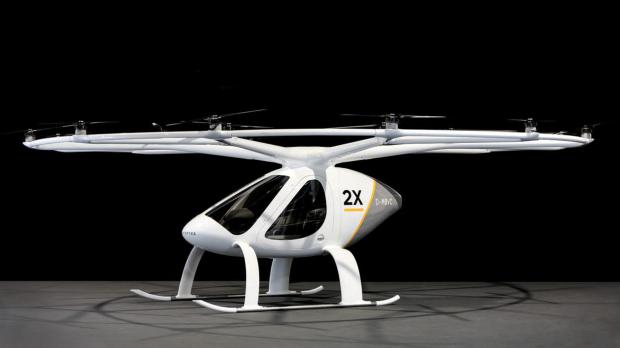
With an eye to actually deploying this thing as a personal flying taxi some time in the future, it has made some revisions and this week unveiled a sleeker Volocopter 2, which it plans to start testing next year.
Much like the Ehang taxi drone that is expected to start ferrying passengers around Dubai in July, the Volocopter 2 is an all-electric aerial mobility machine that takes up to two passengers from point A to point B without a pilot. It lifts off and lands vertically and can hover in place if need be, powered by nine independent batteries.
The second iteration of the ambitious Volocopter doesn't look all that different to the first, though e-volo does describe its appearance as more sporty. Whatever the aesthetics, the company says that the Volocopter 2 is its first series model and part of a "consequent evolution" of its earlier prototype toward everyday use. This means it runs on swappable batteries so it can take off again within minutes if it runs out of juice.