










Breaking News
 This is the future we shall bring into being
 Elon Musk's Vision For The Future Looks Like A Movie
 Phosphorus Munitions Fired by Israel Burn Groves, Orchards in Southern Lebanon
 Iran's IRGC Warns It Will Expand 'Geography of the War' If the US Attacks Again
Top Tech News
 BEYOND THE MOON: NASA plans a nuclear-powered fleet to push DEEPER into space
 Big Oil Backs Mazama's $135 Million Bet On Superhot Geothermal
 Quantum compass takes flight on Northrop's Lumberjack drone
 Terrifying AI Behavior Even Its Creators Couldn't Explain
 WW3 Near-Miss? AI Hallucinated Nuclear Weapons Components Aboard Chinese Vessel Bound For Iran
 Stripe Is Building the Toll Road for the Machine Economy
 Toyota Dakar hopeful swaps twin-turbo V6 for hydrogen fuel cells
 4-min turbo-inflatable cubic camp castle is now available in the USA
 Researchers Used Claude To Hack OpenAI Employee Accounts
 Chinese Scientists Develop New Oil Refining Method That Cuts Energy Use by 90%



LSD MICRODOSES MAKE PEOPLE FEEL SHARPER, AND SCIENTISTS WANT TO...
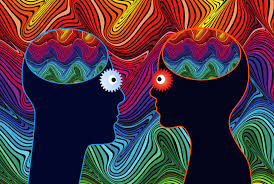
May didn't notice much with the first dose of LSD. She felt good, and she got a lot accomplished, and that was all.
It was the day after that things really clicked. She felt even better, and she got a lot more accomplished. She repeated this pattern for a month — one 10-microgram dose of LSD every fourth day — as per the regimen recommended by psychologist and microdosing research pioneer James Fadiman's protocol, made mainstream-famous by Ayelet Waldman's monthlong LSD self-study chronicled in last year's A Really Good Day.
"I did a little experiment," says May, a 64-year-old psychotherapist in Marin County requesting anonymity. "It was this game on my iPad that I was kind of stuck on, and I noticed that whenever I was on day two of the microdosing [regimen], my performance was significantly better."
This wasn't May's first time doing acid. She'd taken LSD (full name: lysergic acid diethylamide) sporadically over the past 40 years. This was, however, her first foray into microdosing. She'd heard promises that microdosing LSD would yield heightened productivity and dissipate mental clutter.