










Breaking News
 This is the future we shall bring into being
 Elon Musk's Vision For The Future Looks Like A Movie
 Phosphorus Munitions Fired by Israel Burn Groves, Orchards in Southern Lebanon
 Iran's IRGC Warns It Will Expand 'Geography of the War' If the US Attacks Again
Top Tech News
 BEYOND THE MOON: NASA plans a nuclear-powered fleet to push DEEPER into space
 Big Oil Backs Mazama's $135 Million Bet On Superhot Geothermal
 Quantum compass takes flight on Northrop's Lumberjack drone
 Terrifying AI Behavior Even Its Creators Couldn't Explain
 WW3 Near-Miss? AI Hallucinated Nuclear Weapons Components Aboard Chinese Vessel Bound For Iran
 Stripe Is Building the Toll Road for the Machine Economy
 Toyota Dakar hopeful swaps twin-turbo V6 for hydrogen fuel cells
 4-min turbo-inflatable cubic camp castle is now available in the USA
 Researchers Used Claude To Hack OpenAI Employee Accounts
 Chinese Scientists Develop New Oil Refining Method That Cuts Energy Use by 90%



New world record set for longest drone delivery
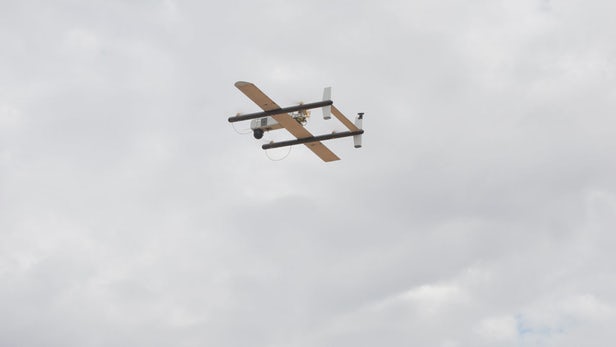
On May 5, a fixed-wing HQ-40 UAV carried a package more than 97 miles (156 km), under the watchful eye of the Nevada Institute for Autonomous Systems (NIAS).
Drones from companies like Amazon, 7-Eleven, Domino's and UPS have already taken to the skies to deliver packages and pizza to customers, but those trips are usually short, last-mile trials. The record-breaking UAV journey covered 97 miles from a location in central Texas to carry a pneumatic part to the city of Austin.
Controlled remotely through a cellular communication link, the drone followed a predetermined flight path through the National Airspace System (NAS). Unfortunately, current regulations in the US prohibit drones being flown outside line of sight, so a team of observers had to be dotted along the route to make sure the aircraft remained visible at all times.