










Breaking News
 EXCERPTS: Citigroup Inc. received approval to launch a wholly-owned securities business...
 The Crown Wants It Kept Secret: AG Asks the Federal Court to Seal Information...
 The Supreme Court Just Denied Your Constitutional Rights
 The state is trying to crush the Amish with ruinous penalties.
Top Tech News
 Modular phone promises total privacy at the flick of a switch
 Genetically Engineered War Dogs for 134 Pound Cyborg Dire Wolves Now – Later 600 Pound Wolves
 They're Quietly REPLACING Our Food With THIS… And Nobody Is Talking About It!
 Chicago Opens First "Teacher-Free" AI School as Global Push Accelerates
 Solar Panels Are Doing Something Nobody Expected
 DeLorean climbs skyward to race electric flying cars
 Atari's 800XL returns with a keyboard, cartridges and BASIC
 Bioinspired robot airdrops into remote waters via morphing wing-sail
 Anduril interceptor adapts to emerging threats via swappable stages
 I Built a Website to Expose Solar and Battery Scams


Google's Sergey Brin Reportedly Building Secret Airship In An Old NASA Hanger
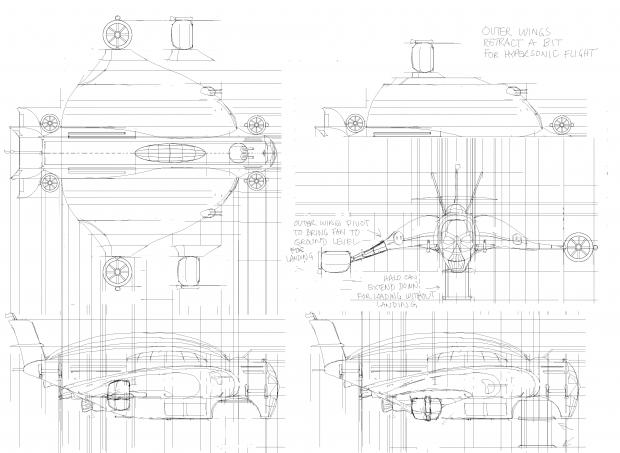
"Sorry, I don't have anything say about this topic right now," Brin stated in an email.
Apparently Bring has been intrigued by airships for a very long time. It started when he would visit Ames, which happens to be located next to the headquarters for Alphabet, Google's parent company, in Mountain View, California. It was once home to the USS Macon, an airship built by the U.S. Navy. When Brin viewed photographs of the Macon three years ago, he decided he wanted to build one.
Brin's project is entirely separate from Google and Alphabet. The construction of his airship is being overseen by Alan Weston, former director of programs at NASA Ames. Weston has an interesting past, one that includes being a member of the Dangers Sports Club, a group of smartypants adrenaline junkies who performed risk-taking stunts, such as catapulting people across fields into nets. The group is credited with inventing the practice of bungee jumping.
Weston would later join the Air Force then NASA where he would work on a number of projects. In a radio interview four years ago, Weston outlined plans for an airship that could haul cargo. He touted the benefits of such a thing, as an airship would be more fuel efficient than airplanes and would be capable of delivering cargo directly to where they're needed.
He also described a prototype of a helium-based craft, one that could carry 500 tons without a ballast. It is not clear if either of those ideas are related to Brin's airship, but either way, it appears Brin's project is in the right hands.