










Breaking News
 Amazon Boeing Plane Bursts Into Flames After it Overshoots Runway at Miami International Airpot
 Trump grants clemency to 30 people, White House pardon czar says
 Bessent: "CUT THE SNAKE'S HEAD OFF"--But Who is the Real Target?
 Special LIVE Saturday Show: Could The Gov Seize XRP After Chilling FDIC Admission? Gas Prices...
Top Tech News
 Floating data center would provide water and electricity to 32,000 homes
 OpenAI Cuts Off Elon's Cursor, Humanity's First Star Probe, and Trump's Nuclear Mars Shi
 Eating pollution? Plastic-to-cookie technology raises safety, environmental concerns
 Ford's $30,000 Fathom EV Truck Appears More Conventional Than Expected
 Berlin-based artist Simon Weckert explored that idea with Digital Camouflage...
 Tether expands tokenization business into Saudi Arabia, starting with real estate
 Ukraine is facing a new problem in its war with Russia:
 It charges more than it discharges while driving
 Dataminr AI tech to go live on NATO Maven system: CEO
  The Most Dangerous Interview Ever Recorded? PART 2


Breakthrough high temperature ceramic for hypersonic planes and much more
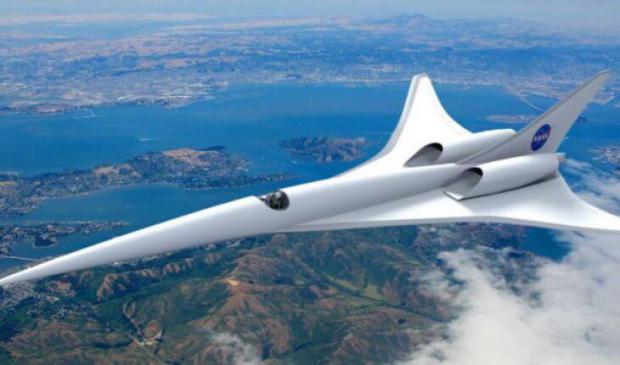
Being able to withstand higher temperatures is central to better engineering for more efficient jet engines, high efficiency turbines for energy. Higher temperature materials are fundamental to allowing many things to be faster, more powerful and more efficient.
University of Manchester and Central South University of China performed the work. This breakthrough also means that China will be catching up on fighter jet engines and rocket applications and cutting tools.
They have designed a carbide assembled by solid solution and atomic diffusion during PC and RMI (reactive melt infiltration). The carbide coating developed by teams in both University of Manchester and Central South University is proving to be 12 times better than the conventional UHTC, Zirconium carbide (ZrC). ZrC is an extremely hard refractory ceramic material commercially used in tool bits for cutting tools.