










Breaking News
 This is the future we shall bring into being
 Elon Musk's Vision For The Future Looks Like A Movie
 Phosphorus Munitions Fired by Israel Burn Groves, Orchards in Southern Lebanon
 Iran's IRGC Warns It Will Expand 'Geography of the War' If the US Attacks Again
Top Tech News
 BEYOND THE MOON: NASA plans a nuclear-powered fleet to push DEEPER into space
 Big Oil Backs Mazama's $135 Million Bet On Superhot Geothermal
 Quantum compass takes flight on Northrop's Lumberjack drone
 Terrifying AI Behavior Even Its Creators Couldn't Explain
 WW3 Near-Miss? AI Hallucinated Nuclear Weapons Components Aboard Chinese Vessel Bound For Iran
 Stripe Is Building the Toll Road for the Machine Economy
 Toyota Dakar hopeful swaps twin-turbo V6 for hydrogen fuel cells
 4-min turbo-inflatable cubic camp castle is now available in the USA
 Researchers Used Claude To Hack OpenAI Employee Accounts
 Chinese Scientists Develop New Oil Refining Method That Cuts Energy Use by 90%



China dominates generation 3+ nuclear reactors
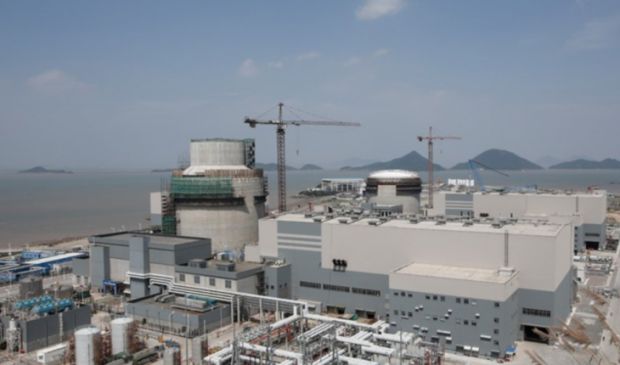
Compared with current technology, the AP1000 reactor is theoretically 100 times safer, requires 80 per cent less piping, 85 per cent fewer control cables, and need a third fewer pumps.
The AP1000 is several years later than originally planned.
* the building site sat idle for years, awaiting the US supplier to redesign the reactor's main pump
* 2011 nuclear reactor meltdown in Japan's Fukushima caused a halt on all nuclear power plant construction and redesigns for increased safety
* a six month delay because of Westinghouse bankruptcy
With the commissioning of Sanmen, the industry is hoping to get the nod to build more reactors at home, and even export the AP1000 technology.
China has combined the best of AP1000 and EPR to conceive the Hualong design, featuring a top-side water tank and a catchment container. A Hualong reactor was sold to Pakistan, where construction began in 2015 scheduled for commissioning in late 2021. Another is currently awaiting the UK government's review to build a plant.