










Breaking News
 'UNFAIR': Mamdani's city-run grocer plan SLAPPED with lawsuit
 Trump Says If Iran Had a Nuclear Weapon, He Would Have Politely Called the Supreme Leader...
 Tucker Carlson: We are on the brink of a world war that ends with the use of nuclear weapons
 Who is trying to destroy the United States and the world?
Top Tech News
 NASA Super Light Solar Sail Project Will Be 12-40 Times Lighter and Faster
 Space Telescope Interferometer to Image Exoplanet Continents
 Twenty-five years of "temporary": how 9/11 built a surveillance state Americans never vote
 I'll Never Buy Another WALMART Battery!
 Shoei GT-Air 3 Smart helmet drops with built-in AR for $1,500
 Freezable titanium plate keeps your cooler chilled way longer than ice packs
 Review: Affordable thermal device is made for discovering life outdoors
 AI Whistleblower Tells Tucker How AI Could Kill All Humans by 2040
 You Hate Flock? Well There's More...
 Will Spiking Diesel Prices Drive Autonomous Trucking?



$2 million competition aims to make jetpacks a reality by 2019
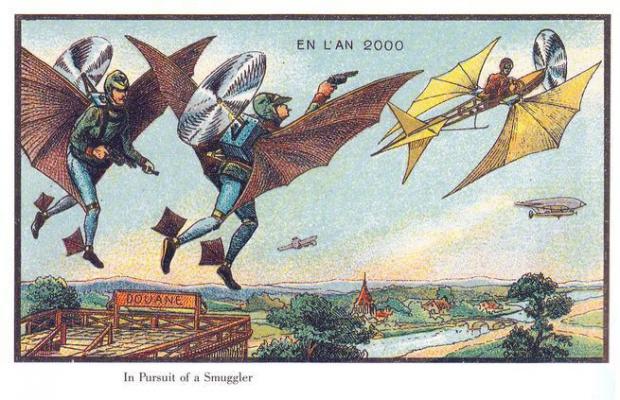
The dream of flight was never meant to be confined to a 28-inch seat with 150 strangers and miniature bags of pretzels. Early aircraft were fabric and wood extensions of their pilots' bodies, technological exoskeletons carrying a dream into the air. While the laws of aerodynamics and engineering drove planes into long aluminum tubes with wings, fiction maintained the dream of a personal flying tool that people could strap to their back, ride through the air, and then arrive intact and on-time at work. For decades, inventors endeavored to turn jetpack from fictional whim to real machines, with some limited success, but nothing so world-changing as to enter the mass market. GoFly, a Boeing-sponsored competition announced today, wants to turn jetpacks from an aviation novelty to an everyday tool. To do that, it's inviting people from around the world to enter a two-year contest, with $2 million total in prizes, for the creation of a personal flying device that can carry an individual 20 miles without refueling or recharging.