










Breaking News
 Swap Lines: The Federal Reserve Extends Its Tightrope
 The Transgender Mirage Is Cracking
 The Collapse of the Saudi-American Alliance?
 BREAKING: EPA eliminates rule that limits 'greenhouse gas' emissions from power plants
Top Tech News
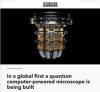 Quantum computing may soon become part of the microscope itself.
 Volkswagen Just Unveiled The Most Efficient EV Ever Tested
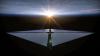 NASA Super Light Solar Sail Project Will Be 12-40 Times Lighter and Faster
 Space Telescope Interferometer to Image Exoplanet Continents
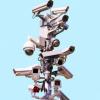 Twenty-five years of "temporary": how 9/11 built a surveillance state Americans never vote
 I'll Never Buy Another WALMART Battery!
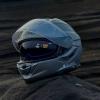 Shoei GT-Air 3 Smart helmet drops with built-in AR for $1,500
 AI Whistleblower Tells Tucker How AI Could Kill All Humans by 2040
 You Hate Flock? Well There's More...
 Will Spiking Diesel Prices Drive Autonomous Trucking?



A DIY Space Suit for the 99 Percent
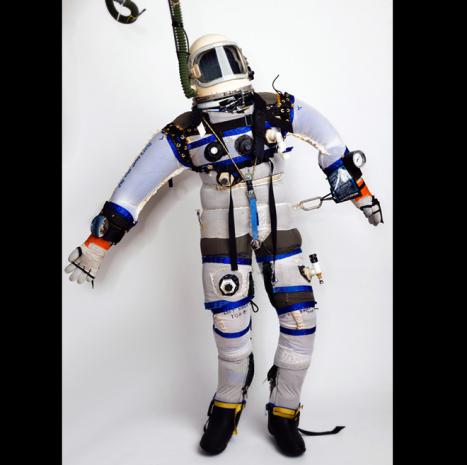
The 45-year-old Portland State University anthropologist couldn't join NASA's aviation program because of his poor eyesight. Lacking the funds to buy a ticket on a private space flight, he decided to take matters into his own hands.
At 50,000 feet up, death is imminent, so the first thing to do was build a suit. Smith bought some of the parts off the Internet: a diver's dry suit, a gauge that measures internal air pressure, and an aquarium pump to circulate cooling fluid. Ace Hardware had other bits like nylon straps, wire, and a slew of PVC fittings and valves. It's topped off with an authentic 1980s-era soviet fighter helmet.
Once the proof-of-concept suit is complete, Smith will test his rig in a hypobaric chamber, and if all goes well it will be rebuilt with sturdier elements. Then he'll craft a nylon balloon, get a balloon pilot's license, and clear his route with authorities. "If they could do this in the 1930s with rubberized canvas and pigskin gloves, surely I can do it now with the technology available," Smith says. "This is not so crazy. This is not so wild." Sure. We'll just stay on the ground and watch from here, thanks.