










Breaking News
 Why Cities Should Convert Public Property to Private Housing
 Elon Musk plans SpaceXSI rebrand for AI unit amid 'Super Intelligence' push
 'Got little bit more involved beyond advocacy': Jaishankar on India's peace efforts to e
 Doctors Euthanize 17-Year-Old Girl Who Had Depression and Anxiety
Top Tech News
 Most artificial limbs rely on silicone or plastic to mimic human hands.
 Flying cell tower beams phone signal to Japan from 10 miles up
 Chinese Commercial Reactor Achieves Nuclear Fusion with Clean Hydrogen-Boron Fuel
 Med Beds Just Took a MASSIVE Step Forward, Healing People in Days!
 Palmer Luckey: Autonomous Weapons Are Ancient and Why Anduril Won't Build Humanoids | EP #295
 A laser just photographed objects through six feet of concrete
 Elon Musk's Next-Gen Motor Destroy Entire EV Industry
 China's disputed satellite refueling heralds new space war era
 BYD Will Put Solid-State Batteries In An EV Next Year: Executive
 FDA-cleared exoskeleton puts spinal-cord patients back on their feet



Health Ranger to announce lab verification and product certification service ...
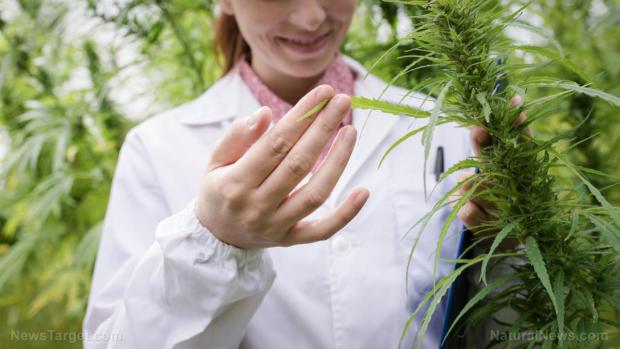
(Natural News) Coming in early 2018, I will be announcing a commercial lab verification service that will allow CBD oil and dietary supplement companies to place "Lab Verified" labels on their products and websites, backed by ISO-accredited laboratory analysis that relies on high-end mass spec instrumentation.
One of the issues we're seeing today in the hemp extract industry is very high saturation of pesticides and fungicides in hemp-related products. That problem stems from the almost unbelievable lack of regulation of hemp agricultural methods in states where hemp production has been legalized. Toxic solvents are also frequently used in many hemp extracts — such as hexane, methanol, IPA, etc. — leaving potentially dangerous chemical residues in final products (some of which are vaped by consumers).
As one of the pioneers in cannabis quantitation and validation, I am the co-author of a science paper published in the LC/GC science journal entitled, "Liquid Chromatography–Time-of-Flight Mass Spectrometry for Cannabinoid Profiling and Quantitation in Hemp Oil Extracts." Since that science paper was published, my lab has developed even more precise mass spec analysis techniques that allow us to validate the following properties of CBD oil / hemp extracts:
Accurate quantitation of CBD, CBDA, THC and other compounds typically found in hemp extracts.
Molecular verification of accurate molecules, eliminating any possibility of counterfeit chemicals. (Using a combination of accurate mass, ion fragmentation, isotopic abundance, etc.)
The absence of pesticides, herbicides, fungicides and other agricultural chemicals. (This is a huge issue, as many hemp products sold today are derived from cannabis plants that are heavily sprayed with toxic pesticides.)
The absence of toxic solvents and extract chemicals that are frequently used in the industry even though they may pose a very real danger to consumers. Some hemp production companies, for example, are currently extracting hemp products using isopropyl alcohol (IPA), which is extremely toxic to the human body when ingested.
The absence of toxic heavy metals, and the presence of nutritive minerals such as zinc and magnesium.
In other words, we are testing CBD products for not just CBDs, but also for pesticides, industrial chemicals and heavy metals as well.