










Breaking News
 Still Discriminating
 Nike CEO may have just admitted the company went too woke as stock hits 12-year low
 Will Europe Be Annihilated Over Kaliningrad?
 The Last Asset--You Will Own Nothing
Top Tech News
 Most artificial limbs rely on silicone or plastic to mimic human hands.
 Flying cell tower beams phone signal to Japan from 10 miles up
 Chinese Commercial Reactor Achieves Nuclear Fusion with Clean Hydrogen-Boron Fuel
 Med Beds Just Took a MASSIVE Step Forward, Healing People in Days!
 Palmer Luckey: Autonomous Weapons Are Ancient and Why Anduril Won't Build Humanoids | EP #295
 A laser just photographed objects through six feet of concrete
 Elon Musk's Next-Gen Motor Destroy Entire EV Industry
 China's disputed satellite refueling heralds new space war era
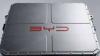 BYD Will Put Solid-State Batteries In An EV Next Year: Executive
 FDA-cleared exoskeleton puts spinal-cord patients back on their feet



Particle Physics Discovery...
Melting elementary particles such as quarks can produce amounts of energy so massive it is equivalent to 10 times that of nuclear fusion, researchers have reported.
Quarks
Quarks are the most basic building blocks of matter. The protons and neutrons that make up matter are composed of quarks. Unlike protons and electrons, which have charges of +1 and -1, however, quarks have fractional electric charge. Quarks that are joined together form composite particles called hadrons. Quarks come in six flavors namely: up, down, top, bottom, strange, and charm.
Fusion Of Quarks Can Produce Massive Amount Of Energy
In a new study, researchers showed that two bottom quarks could theoretically fuse together in a powerful flash that can result in massive amount of energy that can spill out into the universe.
The fusion of two bottom quarks will produce 138 megaelectronvolts (MeV), which is eight times more powerful than individual nuclear fusion events inside a hydrogen bomb.