










Breaking News
Trump's War In Iran Is Not Destroying Iran; It Is Destroying AMERICA
 NASA Chief: "We Just Built Antigravity Propulsion!"
 Carl Higbie (NEWSMAX) says LIVE on TV: "The Senate is supposed to vote on the Clarity Act NEXT
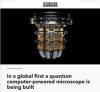 Quantum computing may soon become part of the microscope itself.
Top Tech News
Quantum computing may soon become part of the microscope itself.
 Volkswagen Just Unveiled The Most Efficient EV Ever Tested
 NASA Super Light Solar Sail Project Will Be 12-40 Times Lighter and Faster
 Space Telescope Interferometer to Image Exoplanet Continents
 Twenty-five years of "temporary": how 9/11 built a surveillance state Americans never vote
 I'll Never Buy Another WALMART Battery!
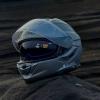 Shoei GT-Air 3 Smart helmet drops with built-in AR for $1,500
 AI Whistleblower Tells Tucker How AI Could Kill All Humans by 2040
 You Hate Flock? Well There's More...
 Will Spiking Diesel Prices Drive Autonomous Trucking?



These Star Wars-Like 3D Projections Are More Epic Than Any Hologram You've Ever Seen
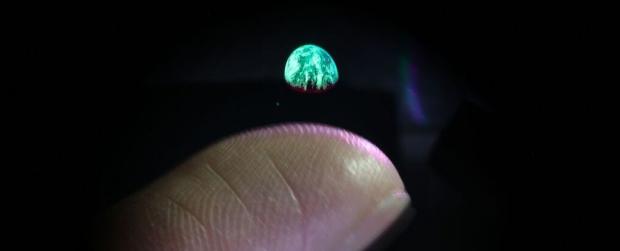
Holograms are pretty cool, sure. But they're still just two-dimensional projections that hover in the air, and as soon as you step to the side, the magic disappears, revealing how flat the thing really is.
But now researchers from Brigham Young University have demonstrated they can create fully three-dimensional projections of moving images - and they use light and particles in the air to achieve this.
The end result is closer than ever to the miniature Princess Leia projection in Star Wars: A New Hope, and that's no accident.
"We refer to this colloquially as the Princess Leia project," said lead researcher Daniel Smalley.
"Our group has a mission to take the 3D displays of science fiction and make them real. We have created a display that can do that."