










Breaking News
 Why We're Being Censored on Substack, Why We're Leaving Substack, and Why YOU Should Too!
 WATCH LIVE: Trump addresses 2026 United Nations General Assembly
 The current decline in US bonds is unprecedented:
 The article is getting a lot of attention.
Top Tech News
 BEYOND THE MOON: NASA plans a nuclear-powered fleet to push DEEPER into space
 Big Oil Backs Mazama's $135 Million Bet On Superhot Geothermal
 Quantum compass takes flight on Northrop's Lumberjack drone
 Terrifying AI Behavior Even Its Creators Couldn't Explain
 WW3 Near-Miss? AI Hallucinated Nuclear Weapons Components Aboard Chinese Vessel Bound For Iran
 Stripe Is Building the Toll Road for the Machine Economy
 Toyota Dakar hopeful swaps twin-turbo V6 for hydrogen fuel cells
 4-min turbo-inflatable cubic camp castle is now available in the USA
 Researchers Used Claude To Hack OpenAI Employee Accounts
 Chinese Scientists Develop New Oil Refining Method That Cuts Energy Use by 90%



C-elegans worm death can help us understand and possibly delay death in humans
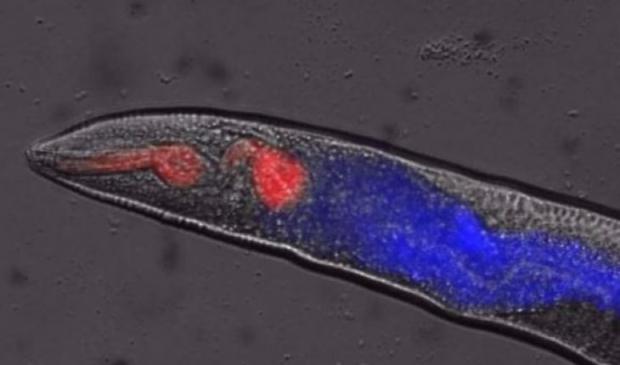
The study, published in the journal Cell Reports, is the first discovery of rigor mortis in worms and provides new insight into the process of 'organismal' death.
Cell Reports – Coupling of Rigor Mortis and Intestinal Necrosis during C. elegans Organismal Death
Highlights
•A wave of body wall muscle contraction occurs during C. elegans organismal death
•This rigor mortis-like phenomenon is coupled to a wave of intestinal necrosis
•Both waves are accompanied by Ca2+ release and a drop in ATP levels
•Properties of long-lived daf-2 mutants suggest resistance to organismal death
Summary
Organismal death is a process of systemic collapse whose mechanisms are less well understood than those of cell death. We previously reported that death in C. elegans is accompanied by a calcium-propagated wave of intestinal necrosis, marked by a wave of blue autofluorescence (death fluorescence).