










Breaking News
Trump's War In Iran Is Not Destroying Iran; It Is Destroying AMERICA
 NASA Chief: "We Just Built Antigravity Propulsion!"
 Carl Higbie (NEWSMAX) says LIVE on TV: "The Senate is supposed to vote on the Clarity Act NEXT
 Quantum computing may soon become part of the microscope itself.
Top Tech News
Quantum computing may soon become part of the microscope itself.
 Volkswagen Just Unveiled The Most Efficient EV Ever Tested
 NASA Super Light Solar Sail Project Will Be 12-40 Times Lighter and Faster
 Space Telescope Interferometer to Image Exoplanet Continents
 Twenty-five years of "temporary": how 9/11 built a surveillance state Americans never vote
 I'll Never Buy Another WALMART Battery!
 Shoei GT-Air 3 Smart helmet drops with built-in AR for $1,500
 AI Whistleblower Tells Tucker How AI Could Kill All Humans by 2040
 You Hate Flock? Well There's More...
 Will Spiking Diesel Prices Drive Autonomous Trucking?



Samsung's Latest TV Camouflages Itself When You're Not Using It
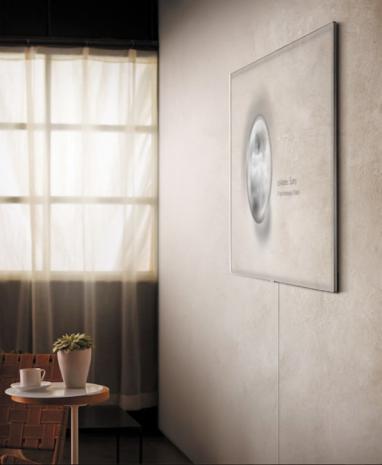
The worst part of buying a big television is no longer the price. They're really quite affordable now! It's that you have this 65-inch black box hanging on the wall in your living room, like a black hole leaching away your own good taste.
Now, Samsung has designed what could be the perfect solution–by giving your TV its own invisibility cloak. The company's new line of 4K QLED televisions, announced this week, feature an Ambient Mode that lets them blend right into your wall. How? After you hang the TV, you take a photo of the TV of your wall. Then the TV creates its chameleonic screensaver. As a result, the TV more or less turns invisible, with only its tiny bezel standing between you and Marie Kondo nirvana.
It's worth noting that, over the past few years, Samsung has attacked the footprint of its own TVs with a singular obsession. After teaming up with Yves Béhar, the company released the Frame in 2017. Instead of hiding the TV, it transformed it into a literally framed piece of art, which you could load up with a selection of artists on demand. Then this year at the Consumer Electronics Show, it debuted the Wall, a 146-inch display that actually featured fake bookcases and vases (presumably so that you might be willing to buy a TV that literally required a wall of your house and cost the equivalent of a car).