










Breaking News
 12 Glaring Realities Of Marxist Socialism
 The EU & The Iron Law Of Oligarchy
 Iron Ore Below $100 As UBS Warns "Fundamentals Are Deteriorating"
 Global Bond Market On Edge As Japanese Yields Soar After "Horrible" 10Y JGB Auction
Top Tech News
 Voyager 1 approaches one light day from Earth
 Visual Implants
 Renewable Energy Breakthrough! World's Most Efficient Tesla Turbine System
 I Told You So
 Meet Sunbird, a nuclear fusion-powered space tug concept from Pulsar Fusion.
 China and Russia launch 29-nation AI alliance to rival western control of technology
 BREAKING: China has begun manufacturing domestically developed Immersion Deep...
 Idaho's High Desert Becomes Hot Spot For Nuclear Power Revolution
 The World's Largest Electric Aircraft Is About to Take Its First Flight
 Tesla Cybercabs and Superchargers Will Act as Mini Cell Towers for SpaceX Starlink



3D printed human corneas could provide unlimited supply for transplants
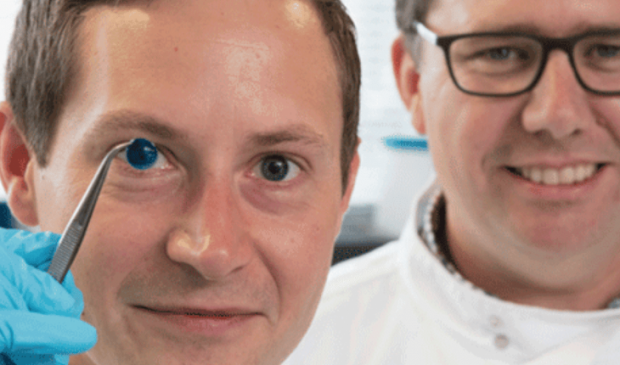
They have a unique gel – a combination of alginate and collagen – which keeps the stem cells alive whilst producing a material which is stiff enough to hold its shape but soft enough to be squeezed out the nozzle of a 3D printer.
Experimental Eye Research – 3D bioprinting of a corneal stroma equivalent
As the outermost layer of the human eye, the cornea has an important role in focusing vision.
Yet there is a significant shortage of corneas available to transplant, with 10 million people worldwide requiring surgery to prevent corneal blindness as a result of diseases such as trachoma, an infectious eye disorder.
In addition, almost 5 million people suffer total blindness due to corneal scarring caused by burns, lacerations, abrasion or disease.