










Breaking News
 Amazon Boeing Plane Bursts Into Flames After it Overshoots Runway at Miami International Airpot
 Trump grants clemency to 30 people, White House pardon czar says
 Bessent: "CUT THE SNAKE'S HEAD OFF"--But Who is the Real Target?
 Special LIVE Saturday Show: Could The Gov Seize XRP After Chilling FDIC Admission? Gas Prices...
Top Tech News
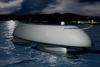 Floating data center would provide water and electricity to 32,000 homes
 OpenAI Cuts Off Elon's Cursor, Humanity's First Star Probe, and Trump's Nuclear Mars Shi
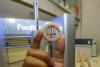 Eating pollution? Plastic-to-cookie technology raises safety, environmental concerns
 Ford's $30,000 Fathom EV Truck Appears More Conventional Than Expected
 Berlin-based artist Simon Weckert explored that idea with Digital Camouflage...
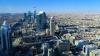 Tether expands tokenization business into Saudi Arabia, starting with real estate
 Ukraine is facing a new problem in its war with Russia:
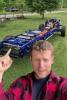 It charges more than it discharges while driving
 Dataminr AI tech to go live on NATO Maven system: CEO
  The Most Dangerous Interview Ever Recorded? PART 2


First space tourist flights could come in 2019
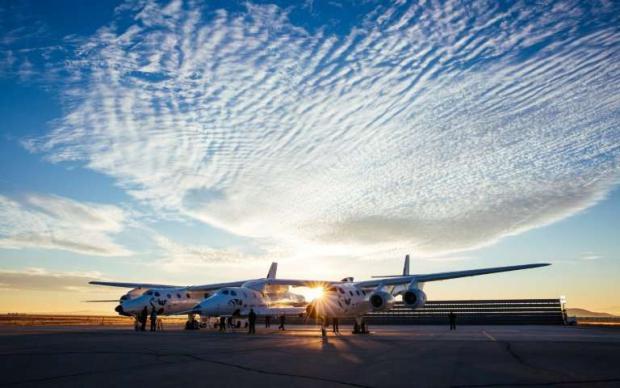
The two companies leading the pack in the pursuit of space tourism say they are just months away from their first out-of-this-world passenger flights -- though neither has set a firm date.
Virgin Galactic, founded by British billionaire Richard Branson, and Blue Origin, by Amazon creator Jeff Bezos, are racing to be the first to finish their tests -- with both companies using radically different technology.
- Moments of weightlessness -
Neither Virgin nor Blue Origin's passengers will find themselves orbiting the Earth: instead, their weightless experience will last just minutes. It's an offering far different from the first space tourists, who paid tens of millions of dollars to travel to the International Space Station (ISS) in the 2000s.
Having paid for a much cheaper ticket -- costing $250,000 with Virgin, as yet unknown with Blue Origin -- the new round of space tourists will be propelled dozens of miles into the atmosphere, before coming back down to Earth. By comparison, the ISS is in orbit 250 miles (400 kilometers) from our planet.
The goal is to approach or pass through the imaginary line marking where space begins -- either the Karman line, at 100 kilometers or 62 miles, or the 50-mile boundary recognized by the US Air Force.
At this altitude, the sky looks dark and the curvature of the earth can be seen clearly.
- Virgin Galactic -
With Virgin Galactic, six passengers and two pilots are boarded onto SpaceShipTwo VSS Unity, which resembles a private jet.
The VSS Unity will be attached to a carrier spacecraft -- the WhiteKnightTwo -- from which it will then detach at around 49,000 feet (15,000 meters.) Once released, the spaceship will fire up its rocket, and head for the sky.
Then, the passengers will float in zero-gravity for several minutes, before coming back to Earth.
The descent is slowed down by a "feathering" system that sees the spacecraft's tail pivot, as if arching, before returning to normal and gliding to land at Virgin's "spaceport" in the New Mexico desert.