










Breaking News
 Amazon Boeing Plane Bursts Into Flames After it Overshoots Runway at Miami International Airpot
 Trump grants clemency to 30 people, White House pardon czar says
 Bessent: "CUT THE SNAKE'S HEAD OFF"--But Who is the Real Target?
 Special LIVE Saturday Show: Could The Gov Seize XRP After Chilling FDIC Admission? Gas Prices...
Top Tech News
 Floating data center would provide water and electricity to 32,000 homes
 OpenAI Cuts Off Elon's Cursor, Humanity's First Star Probe, and Trump's Nuclear Mars Shi
 Eating pollution? Plastic-to-cookie technology raises safety, environmental concerns
 Ford's $30,000 Fathom EV Truck Appears More Conventional Than Expected
 Berlin-based artist Simon Weckert explored that idea with Digital Camouflage...
 Tether expands tokenization business into Saudi Arabia, starting with real estate
 Ukraine is facing a new problem in its war with Russia:
 It charges more than it discharges while driving
 Dataminr AI tech to go live on NATO Maven system: CEO
  The Most Dangerous Interview Ever Recorded? PART 2


Aston Martin's flying taxi concept envisages luxurious inter-city travel
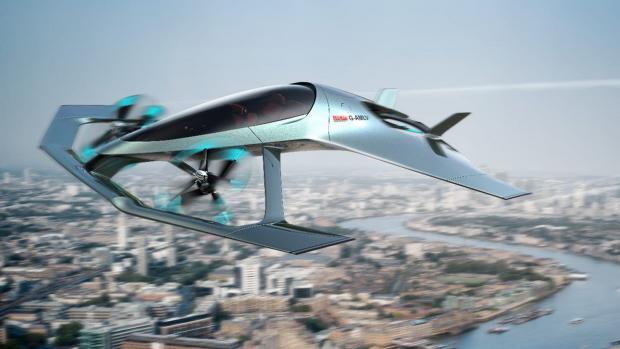
The names mentioned above are just a taste of the action taking place in the flying taxi space. NASA, for example, is investing in the development of advanced batteries to power these machines and is working on new air traffic management systems together with Uber, which is developing flying taxis of its own.
There are also a host of startups that proved rather quick out of the blocks. Volocopter has been testing its 18-rotor aircraft for a number of years with trials underway in Dubai, while Ehang and Surefly recently performed their first manned flights, as did the autonomous Passenger Drone.
The designs of these vary but all are built to more or less carry out the same task, lift urban folks up and over busy city centers to cut commute times, improve air quality and reduce congestion on the ground. Most take an electric-only approach, although some, like the Surefly and Rolls-Royce's EVTOL, use a hybrid powertrain for the extra range that it promises.