










Breaking News
 Still Discriminating
 Nike CEO may have just admitted the company went too woke as stock hits 12-year low
 Will Europe Be Annihilated Over Kaliningrad?
 The Last Asset--You Will Own Nothing
Top Tech News
 Most artificial limbs rely on silicone or plastic to mimic human hands.
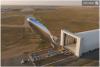 Flying cell tower beams phone signal to Japan from 10 miles up
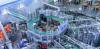 Chinese Commercial Reactor Achieves Nuclear Fusion with Clean Hydrogen-Boron Fuel
 Med Beds Just Took a MASSIVE Step Forward, Healing People in Days!
 Palmer Luckey: Autonomous Weapons Are Ancient and Why Anduril Won't Build Humanoids | EP #295
 A laser just photographed objects through six feet of concrete
 Elon Musk's Next-Gen Motor Destroy Entire EV Industry
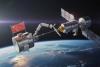 China's disputed satellite refueling heralds new space war era
 BYD Will Put Solid-State Batteries In An EV Next Year: Executive
 FDA-cleared exoskeleton puts spinal-cord patients back on their feet



Solar electric demonstrator takes to the air for the first time
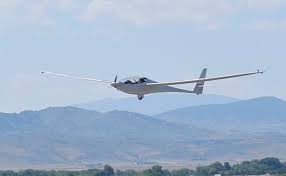
The StratoAirNet medium altitude solar electric demonstrator is being developed for long endurance commercial and government security needs and will operate as an "atmospheric satellite" UAV.
The StratoAirNet prototype has a lightweight composite structure and a 15 meter (50 ft) wingspan packed with SolAero high efficiency PV cells. Under ideal daylight conditions at altitude, the array is claimed to deliver some 2,000 watts for sustained flight.
Though piloted during its debut, and subsequent test flights, at Northern Colorado Regional Airport, the aircraft is destined to become an "atmospheric satellite" UAV, taking a supporting role in long endurance missions including communications relay, internet, mapping, search and rescue, firefighting command and control, anti-poaching monitoring, severe weather tracking, agriculture monitoring, mineral source surveying and spill detection.