










Breaking News
 The AI Bird-Flu Scenario They Just Published
 Japan's first robot ambulance works the 9-1-1 lines for humanoids
 Cheap smartphone add-on pinpoints hidden cameras to shut down spies
 The $600 Tank That Beats a $10,000 Powerwall
Top Tech News
 Terrifying AI Behavior Even Its Creators Couldn't Explain
 WW3 Near-Miss? AI Hallucinated Nuclear Weapons Components Aboard Chinese Vessel Bound For Iran
 Stripe Is Building the Toll Road for the Machine Economy
 Toyota Dakar hopeful swaps twin-turbo V6 for hydrogen fuel cells
 4-min turbo-inflatable cubic camp castle is now available in the USA
 Researchers Used Claude To Hack OpenAI Employee Accounts
 Chinese Scientists Develop New Oil Refining Method That Cuts Energy Use by 90%
 World's smallest CT scanner fits in the palm of your hand
 The Tesla Roadster will blow people's minds
 Peter Thiel-Funded Company Anduril to Triple the Number of Autonomous Surveillance Towers...



Tiny gyroscope the size of a grain of rice could help shrink gadgets even further
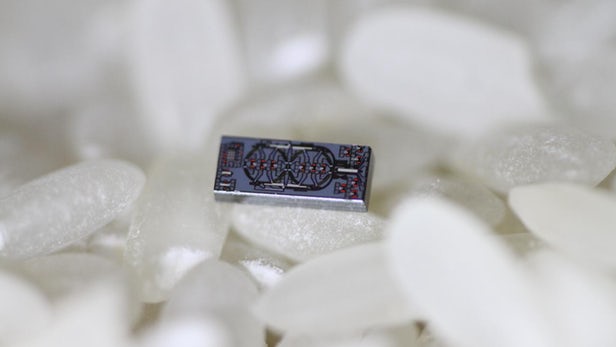
Now scientists have worked out a way of making these gyroscopes much, much smaller.
How small? Well, smaller than a grain of rice in fact. If you're hoping your next phone is going to be an easier fit inside your pocket – or even small enough to clip to your wrist – then this is one of the innovations that might help.
"The proof-of-concept device is capable of detecting phase shifts 30 times smaller than state-of-the-art miniature fibre-optic gyroscopes, despite being 500 times smaller in size," explains the team behind the work.