










Breaking News
 Sea Shells, Paper or Salt As Money?
 There have been no hurricanes in the Atlantic -- Yet! Making 2026 the quietest since satellite...
 Tyranny by Technicality: The Supreme Court Will Not Save Our Republic
 'Climate Terrorism': Manhunt Arrest in Germany Over Rocket Attacks Against High Voltage Powe
Top Tech News
 Chinese Concept Video Imagines the Future of Warfare
 OPTIMUS CONFIRMED: 15,000 Bots This Year -- Tesla to $3,000
 What is Going On With Robotaxi and Cybercab? Here Are All the Answers
 Floating data center would provide water and electricity to 32,000 homes
 OpenAI Cuts Off Elon's Cursor, Humanity's First Star Probe, and Trump's Nuclear Mars Shi
 Eating pollution? Plastic-to-cookie technology raises safety, environmental concerns
 Ford's $30,000 Fathom EV Truck Appears More Conventional Than Expected
 Berlin-based artist Simon Weckert explored that idea with Digital Camouflage...
 Tether expands tokenization business into Saudi Arabia, starting with real estate
 Ukraine is facing a new problem in its war with Russia:


SpaceX's Starlink internet constellation deemed 'a license to print money'
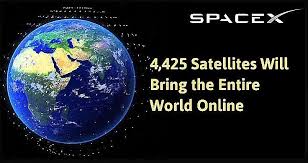
A step or so further, Dr. Handley (according to a University College London colleague) suspects that a network like that proposed by SpaceX could rapidly become "a license to print money" thanks to the tangible benefits it would provide financial institutions and banks – as of today, shaving mere milliseconds off of communications latency can be a serious competitive advantage for traders.
Asked to condense his argument into a few sentences, Dr. Handley's colleague (Reddit /u/davoloid) described his excitement as such.
A Professor in Computer Science [Mark Handley] who specializes in how networks work has done a simulation of Starlink based on the available information. It will make long distance links very fast, as in, a short delay in sending a message, which we call latency. That's very important to banks and similar companies, who always want to have the fastest information. They pay a lot of money to create networks, often private ones rather than through regular commercial providers. Even with the first phase of 1600 satellites, there will be big revenues for SpaceX." – Reddit /u/davoloid, 11/2/18