










Breaking News
 EXCERPTS: Citigroup Inc. received approval to launch a wholly-owned securities business...
 The Crown Wants It Kept Secret: AG Asks the Federal Court to Seal Information...
 The Supreme Court Just Denied Your Constitutional Rights
 The state is trying to crush the Amish with ruinous penalties.
Top Tech News
 Modular phone promises total privacy at the flick of a switch
 Genetically Engineered War Dogs for 134 Pound Cyborg Dire Wolves Now – Later 600 Pound Wolves
 They're Quietly REPLACING Our Food With THIS… And Nobody Is Talking About It!
 Chicago Opens First "Teacher-Free" AI School as Global Push Accelerates
 Solar Panels Are Doing Something Nobody Expected
 DeLorean climbs skyward to race electric flying cars
 Atari's 800XL returns with a keyboard, cartridges and BASIC
 Bioinspired robot airdrops into remote waters via morphing wing-sail
 Anduril interceptor adapts to emerging threats via swappable stages
 I Built a Website to Expose Solar and Battery Scams


Equipment for Moon Mining Operations are Being Developed
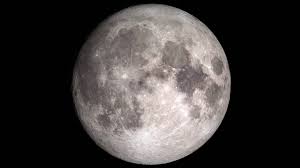
Paragon Space Development and Giner are already making key pieces of what is needed. If we are making large amounts of fuel on the moon then we are massively lowering the cost of all missions in space. The cost of anything from higher earth orbit and beyond becomes several times cheaper.
After the D-day invasion, the Allies made a temporary port. We need to move beyond thinking science missions to working on logistics and supply chains.
Processing Water into Fuel
After water is extracted from the Permanently Shadowed Regions (PSR) of the Moon, it is processed to purify and electrolyze the water into hydrogen (H2) and oxygen (O2). Paragon Space Development Corporation (Paragon) and its partner Giner, Inc. (Giner) are developing the ISRU-derived water purification and Hydrogen Oxygen Production (IHOP) subsystem through a recently awarded NASA Next Space Technologies for Exploration Partnerships-2 (NextSTEP)-2 Broad Agency Announcement (BAA) contract. Paragon's Ionomer-membrane Water Processing (IWP) technology is optimized to perform primary water purification for this ISRU application. The purified water receives final polishing and is then electrolyzed using a Giner static feed water electrolyzer to produce H2 and O2 propellant.