










Breaking News
 The $50/SqFt House: Why People Are Building Quonset Homes
 Man Builds a Root Cellar With a Greenhouse on Top | Start to Finish by @puremichiganliving9952
 They Will Turn Your Money Off! Incoming Stablecoins More Dangerous Than CBDCs - Fitts
 10 Delicious Ways to Preserve Tomatoes
Top Tech News
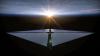 NASA Super Light Solar Sail Project Will Be 12-40 Times Lighter and Faster
 Space Telescope Interferometer to Image Exoplanet Continents
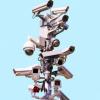 Twenty-five years of "temporary": how 9/11 built a surveillance state Americans never vote
 I'll Never Buy Another WALMART Battery!
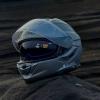 Shoei GT-Air 3 Smart helmet drops with built-in AR for $1,500
 Freezable titanium plate keeps your cooler chilled way longer than ice packs
 Review: Affordable thermal device is made for discovering life outdoors
 AI Whistleblower Tells Tucker How AI Could Kill All Humans by 2040
 You Hate Flock? Well There's More...
 Will Spiking Diesel Prices Drive Autonomous Trucking?



Two Different Quantum Dot Qubits Combined to Overcome Limitations
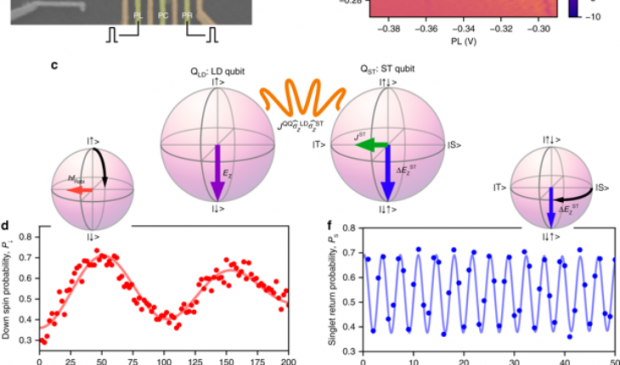
They combined single-spin qubit called a Loss-DiVincenzo qubit and a singlet-triplet qubit.
The Loss-DiVincenzo qubit has very high control fidelity—meaning that it is in a clear state, making it ideal for calculations, and has a long decoherence time. It will stay in a given state for a relatively long time before losing its signal to the environment. Unfortunately, the downside to these qubits is that they cannot be quickly initialized into a state or read out.
The singlet-triplet qubit is quickly initialized and read out, but it quickly becomes decoherent. They combined the two types with a type of quantum gate known as a controlled phase gate, which allowed spin states to be entangled between the qubits in a time fast enough to maintain the coherence, allowing the state of the single-spin qubit to be read out by the fast singlet-triplet qubit measurement.