Breaking News
 Still Discriminating
 Nike CEO may have just admitted the company went too woke as stock hits 12-year low
 Will Europe Be Annihilated Over Kaliningrad?
 The Last Asset--You Will Own Nothing
Top Tech News
 Most artificial limbs rely on silicone or plastic to mimic human hands.
 Flying cell tower beams phone signal to Japan from 10 miles up
 Chinese Commercial Reactor Achieves Nuclear Fusion with Clean Hydrogen-Boron Fuel
 Med Beds Just Took a MASSIVE Step Forward, Healing People in Days!
 Palmer Luckey: Autonomous Weapons Are Ancient and Why Anduril Won't Build Humanoids | EP #295
 A laser just photographed objects through six feet of concrete
 Elon Musk's Next-Gen Motor Destroy Entire EV Industry
 China's disputed satellite refueling heralds new space war era
 BYD Will Put Solid-State Batteries In An EV Next Year: Executive
 FDA-cleared exoskeleton puts spinal-cord patients back on their feet



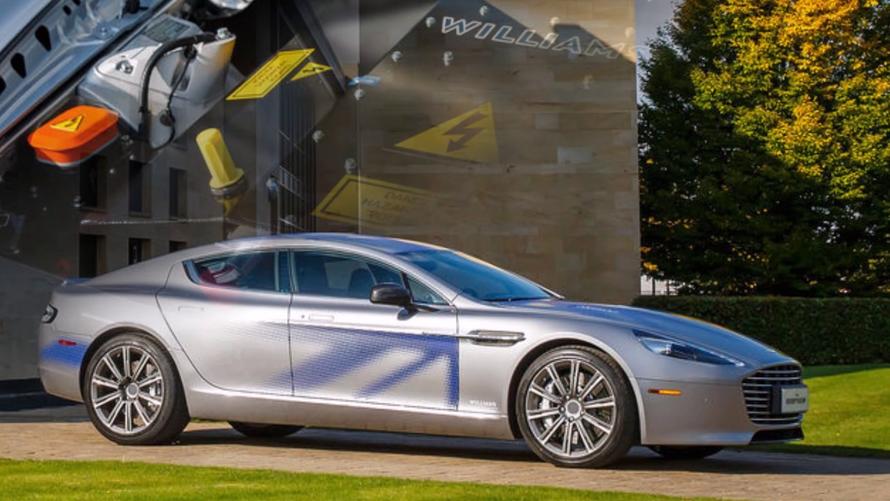
Watch: New Video Surfaces Of Aston Martin's All-Electric Supercar, Production Starts In Months
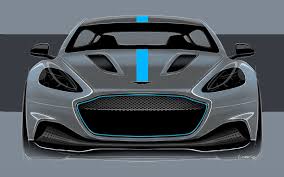
Aston Martin has been manufacturing and racing petrol sportscars for well over a century. It was not until 2017 at the 2018 Frankfurt Motor Show, the British automaker revealed the Rapide E, an all-electric version of the Rapide sports sedan, would head into production in the fourth quarter of 2019. Raipde E is expected to rival Porsche's upcoming Taycan electric saloon and could be an alternative to the Tesla Model S.
The Rapide E is a version of the automaker's 4-seater, high-performance sports sedan, the Rapide. But instead of a V-12 engine under the hood, it has a battery pack connected to electric motors at the rear wheels.
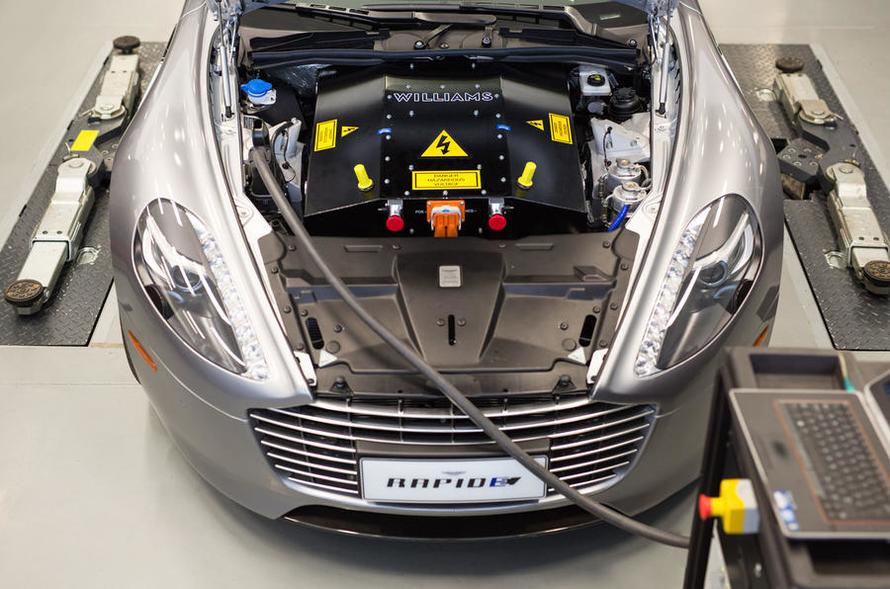
Though this is only a pre-production prototype, and thus not hosting full product specifications, the electric car is expected to debut in the second half of 2019 with performance capabilities that will rival the Rapide.
The pre-production prototype was designed and built with support from Williams Advanced Engineering, a British firm that has extensive expertise in petrol/battery hybrid powertrain for Formula E racing supercars. Williams is expected to aide the auto manufacturer in battery technology development, but at some point, Aston Martin will have its proprietary system, which it will produce in house.