










Breaking News
 The Air Force's Vindictive War on Lance Castle: Ruthless Retaliation After a COVID Mandate...
 I don't think people realize what Elon Musk is actually doing.
 This is unbelievable
  MASSIVE WIPEOUT IN KOREAN MARKETS
Top Tech News
 Genetically Engineered War Dogs for 134 Pound Cyborg Dire Wolves Now – Later 600 Pound Wolves
 They're Quietly REPLACING Our Food With THIS… And Nobody Is Talking About It!
 Chicago Opens First "Teacher-Free" AI School as Global Push Accelerates
 Solar Panels Are Doing Something Nobody Expected
 DeLorean climbs skyward to race electric flying cars
 Atari's 800XL returns with a keyboard, cartridges and BASIC
 Bioinspired robot airdrops into remote waters via morphing wing-sail
 Anduril interceptor adapts to emerging threats via swappable stages
 I Built a Website to Expose Solar and Battery Scams
 Whistleblower Issues Dire Warning: Rogue AI, Hacking Nuclear Programs...



24M Delivers SemiSolid Cells With Energy Density Above 280 Wh/kg
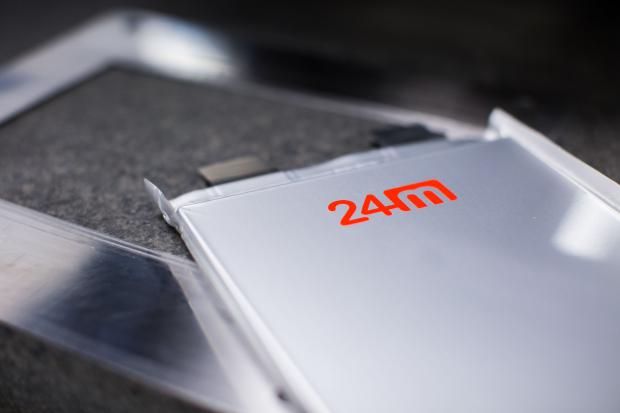
The energy density of the cells produced at the pilot facility exceed 280 Wh/kg, which – as 24M points out – is over 10% more than the current state-of-the-art industry benchmark for EV applications – 250 Wh/kg.
"These deliveries represent a significant milestone in the 24M mission to scale its unique, capital-efficient, low-cost approach to advanced lithium-ion battery manufacturing."
The 12% increase is welcome, although 24M's goal is much higher – 350 Wh/kg or even over 400 Wh/kg. We guess that those goals are not yet available and development needs to be continued.
"The development of the high energy density nickel manganese cobalt (NMC) cells is part of a $7M three-year contract awarded to 24M in 2016 by the United States Advanced Battery Consortium LLC in cooperation with the U.S. Department of Energy. The program is chartered with developing electrochemical energy storage technologies that support the commercialization of hybrid, plug-in hybrid, electric and fuel cell vehicles.