










Breaking News
 RFK Jr. on the VACCINE CARTEL...
 Debt: The First Five Thousand Years by David Graeber
 How a solar farm in the Gobi Desert created a new ecosystem
 HOA seizes man's $450K home over $977 debt - and sells it for just $8K
Top Tech News
 Quantum computing may soon become part of the microscope itself.
 Volkswagen Just Unveiled The Most Efficient EV Ever Tested
 NASA Super Light Solar Sail Project Will Be 12-40 Times Lighter and Faster
 Space Telescope Interferometer to Image Exoplanet Continents
 Twenty-five years of "temporary": how 9/11 built a surveillance state Americans never vote
 I'll Never Buy Another WALMART Battery!
 Shoei GT-Air 3 Smart helmet drops with built-in AR for $1,500
 AI Whistleblower Tells Tucker How AI Could Kill All Humans by 2040
 You Hate Flock? Well There's More...
 Will Spiking Diesel Prices Drive Autonomous Trucking?



Turbo Rocket - A Single-Stage to Orbit Air-Breathing Rocket #SpaceAccess2019
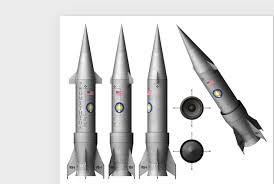
John has previously worked on the SpaceX Raptor engine and has presented a nuclear air-breathing rocket design. The new design is a single-stage to Orbit air-breathing rocket.
It would have a mission-average Isp of more than 1,600sec and payload fractions of 25-50%
John revisited the assumptions around rockets and will use hot hydrogen fuel to enable air-breathing hypersonic rockets to be simplified.
An air-breathing rocket can increase the payload capacity from 1-4% to 25-50%.
The rocket would run at 1000 to 1300 kelvin which does not require new materials.
There has been previous development of hot hydrogen vehicles.
It is a lighter rocket and will use air-braking and then a propulsive thrust landing. Vertical takeoff and vertical landing.