










Breaking News
 'AI Could Kill Us All': Anthropic Researcher Quits, Blasts Labs For 'Gambling With Our L
 Election Bomb in Germany Ends Ukraine War -- Carney's EU Dream Is Dead
 Israel Ramps Up Forced Evacuation Orders, Strikes on Buildings Across Gaza
 Origins of the War In Ukraine - Part I and II
Top Tech News
 Chinese Concept Video Imagines the Future of Warfare
 OPTIMUS CONFIRMED: 15,000 Bots This Year -- Tesla to $3,000
 What is Going On With Robotaxi and Cybercab? Here Are All the Answers
 Floating data center would provide water and electricity to 32,000 homes
 OpenAI Cuts Off Elon's Cursor, Humanity's First Star Probe, and Trump's Nuclear Mars Shi
 Eating pollution? Plastic-to-cookie technology raises safety, environmental concerns
 Ford's $30,000 Fathom EV Truck Appears More Conventional Than Expected
 Berlin-based artist Simon Weckert explored that idea with Digital Camouflage...
 Tether expands tokenization business into Saudi Arabia, starting with real estate
 Ukraine is facing a new problem in its war with Russia:


JET SET GO Plans to build 3,000mph plane that will fly passengers from New York to London
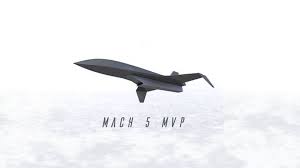
PLANS have been unveiled for a 3,000mph plane that will fly passengers from New York to London in just 90 minutes.
Aerospace firm Hermeus has won funding to develop supersonic commercial planes that will fly more than five times the speed of sound within 10 years.
The company was set up by alumni from Elon Musk's SpaceX and Jeff Bezos-backed aerospace company Blue Origin – which is planning to fly passengers to the moon.
Hermeus says its planes would travel at speeds of more than 3,000mph with a range of 4,600 miles, and will be powered mostly by existing technology.
They will be built using mostly titanium and Hermeus looks to have a functional demo version ready in the next five years.
The firm hopes the planes would be able to fly passengers from New York to London in less than two hours - quicker than the Concorde flight time of three hours and 15 minutes.
Hermeus co-founder and CEO AJ Piplica said: "We've set out on a journey to revolutionize the global transportation infrastructure, bringing it from the equivalent of dial-up into the broadband era, by radically increasing the speed of travel over long distances."