










Breaking News
 Cheap smartphone add-on pinpoints hidden cameras to shut down spies
 The $600 Tank That Beats a $10,000 Powerwall
 What The Hell Is Happening w/ Charlie Robinson
 This Week in World Warfare
Top Tech News
 Terrifying AI Behavior Even Its Creators Couldn't Explain
 WW3 Near-Miss? AI Hallucinated Nuclear Weapons Components Aboard Chinese Vessel Bound For Iran
 Stripe Is Building the Toll Road for the Machine Economy
 Toyota Dakar hopeful swaps twin-turbo V6 for hydrogen fuel cells
 4-min turbo-inflatable cubic camp castle is now available in the USA
 Researchers Used Claude To Hack OpenAI Employee Accounts
 Chinese Scientists Develop New Oil Refining Method That Cuts Energy Use by 90%
 World's smallest CT scanner fits in the palm of your hand
 The Tesla Roadster will blow people's minds
 Peter Thiel-Funded Company Anduril to Triple the Number of Autonomous Surveillance Towers...



CBD for pain relief: What the science says
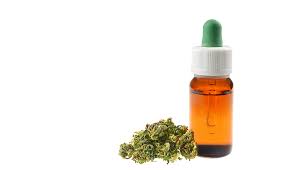
Cannabidiol, or CBD, one of many compounds found in the cannabis plant, appears to be the health industry's new shining star, with producers hawking it as a quick-fix for everything from anxiety to attention deficit hyperactivity disorder (ADHD), despite it only being recently becoming legal in the US. But, according to recent research, out of the 62 percent of people who use CBD to treat a medical condition, most use it to manage chronic pain, arthritis and joint pain.
This story discusses substances that are legal in some places but not in others and is for informational purposes only, not for the purpose of providing legal advice. You shouldn't do things that are illegal -- this story does not endorse or encourage illegal drug use.
"I think there's definitely a lot of excitement about [medical marijuana]," says Kevin Boehnke, Ph.D., research investigator in the department of anesthesiology and the Chronic Pain and Fatigue Research Center at the University of Michigan. "It's always nice to have an extra tool in the toolbox, especially one that has been used for thousands of years and that people know to be relatively safe."
But safe and effective are two different things. When it comes to treating pain, does CBD actually work, and how well?