










Breaking News
 Still Discriminating
 Nike CEO may have just admitted the company went too woke as stock hits 12-year low
 Will Europe Be Annihilated Over Kaliningrad?
 The Last Asset--You Will Own Nothing
Top Tech News
 Most artificial limbs rely on silicone or plastic to mimic human hands.
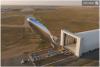 Flying cell tower beams phone signal to Japan from 10 miles up
 Chinese Commercial Reactor Achieves Nuclear Fusion with Clean Hydrogen-Boron Fuel
 Med Beds Just Took a MASSIVE Step Forward, Healing People in Days!
 Palmer Luckey: Autonomous Weapons Are Ancient and Why Anduril Won't Build Humanoids | EP #295
 A laser just photographed objects through six feet of concrete
 Elon Musk's Next-Gen Motor Destroy Entire EV Industry
 China's disputed satellite refueling heralds new space war era
 BYD Will Put Solid-State Batteries In An EV Next Year: Executive
 FDA-cleared exoskeleton puts spinal-cord patients back on their feet



'First of its Kind' Zero-Emission Geothermal Energy System in Canada May Soon Be in Your Tow
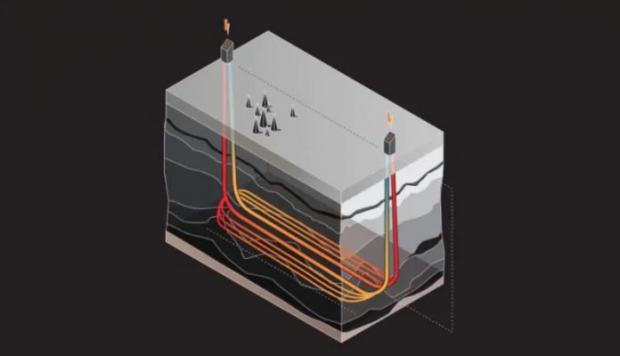
The Eavor Loop is a scalable closed-loop system that could soon allow us to generate consistent, unlimited electricity from the heat emanating from the Earth's core.
The system works like a radiator. The Eavor Loop consists of two wells that are drilled about 2 miles deep (3.5 kilometers) and 3 miles apart (5 kilometers) with several connecting pipes between the two. The wells then circulate proprietary fluid through the loop in order to absorb the Earth's heat and use it to make electricity.
The closed-loop design means that—unlike other geothermal projects—the system requires no fracking or water; it generates zero greenhouse gas emissions; it doesn't run the risk of polluting nearby water sources; and unlike wind or solar power, it does not depend on external elements to generate electricity.
"It's just a much more benign system and it's something that you can implement across 80% of the world instead of 5% of the world like traditional geothermal," Eavor Technologies CEO and President John Redfern told CBC News.
"You can put it almost anywhere. It's not like a windmill or solar panel … almost everything's underground so you can literally put it in someone's backyard."
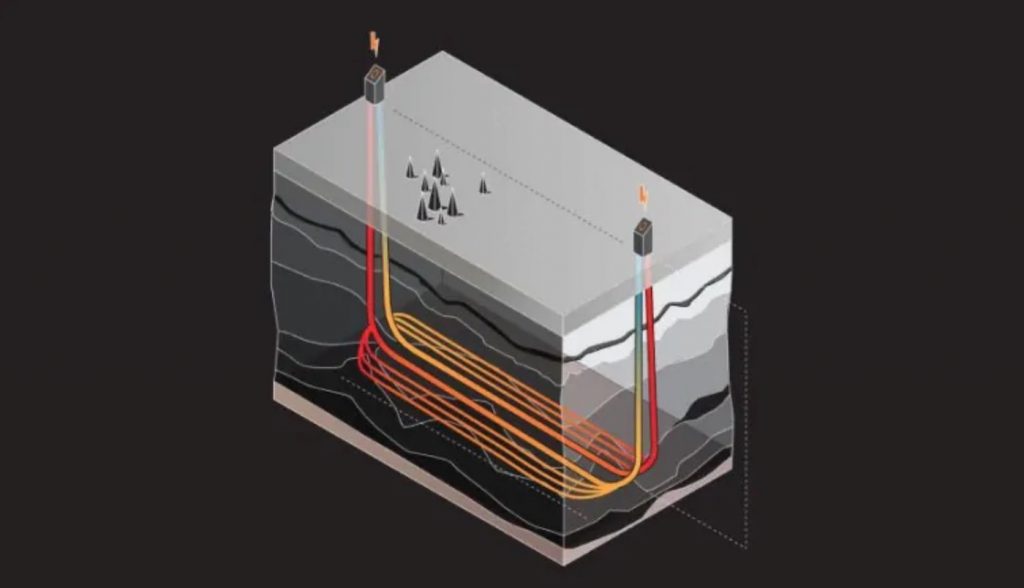
Photo by Eavor Technologies Inc.
Eavor Technologies recently began construction on a new $10 million testing facility in Alberta. With the first-of-its-kind pilot project expected to conclude by the end of the year, government representatives have helped to fund the project with the hopes that it will provide new jobs for regional oil and gas workers who may want to transition into the green energy sector.