










Breaking News
 BEYOND THE MOON: NASA plans a nuclear-powered fleet to push DEEPER into space
 Defense Minister Says Pakistan Will 'Fulfill Our Duty' to Saudi Arabia Amid Attacks from Ans
 Now Even English Villages Want To Leave Britain
 The 'Clancy holdout juror' saga takes another WILD turn…
Top Tech News
 Terrifying AI Behavior Even Its Creators Couldn't Explain
 WW3 Near-Miss? AI Hallucinated Nuclear Weapons Components Aboard Chinese Vessel Bound For Iran
 Stripe Is Building the Toll Road for the Machine Economy
 Toyota Dakar hopeful swaps twin-turbo V6 for hydrogen fuel cells
 4-min turbo-inflatable cubic camp castle is now available in the USA
 Researchers Used Claude To Hack OpenAI Employee Accounts
 Chinese Scientists Develop New Oil Refining Method That Cuts Energy Use by 90%
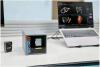 World's smallest CT scanner fits in the palm of your hand
 The Tesla Roadster will blow people's minds
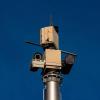 Peter Thiel-Funded Company Anduril to Triple the Number of Autonomous Surveillance Towers...



Scientists Develop New Test That Can Diagnose Lyme Disease in Just 15 Minutes

Finally, a team of scientists have developed a rapid microfluidic test that can detect Lyme disease in just 15 minutes.
Caused by the bacterial species Borrelia burgdorferi and transmitted by the bite of infected Ixodes ticks, the disease can cause serious neurologic, cardiac, and/or rheumatologic complications if left untreated.
Current testing for Lyme disease, called the standard 2-tiered approach (STT) involves running two complex assays (ELISA and western blot) to detect antibodies against the bacterium, and requires experienced personnel in a lab, as well as a few hours to carry out and interpret.
Now, a research team led by Sam Sia, professor of biomedical engineering at Columbia Engineering, has developed a rapid microfluidic test that can detect Lyme disease with similar performance as the STT in a much shorter time.
"Our findings are the first to demonstrate that Lyme disease diagnosis can be carried out in a microfluidic format that can provide rapid quantitative results," says Sia. "This means that our test could easily be used directly in a doctor's office, obviating having to send the samples out to a laboratory."