










Breaking News
 The Commercial Real Estate Crash Is Moving From Paper Losses To Realized Losses
 Ceasefire Begins After Trump and Iran Forget Whose Turn It Was To Attack The Other
 Texas Cattle Assn. Complains of ICE, Iowa Farmers Union Endorses Democrats
 Trump Prepares for an Invasion of Cuba
Top Tech News
 Tesla Model 3 killer charges from 10 to 97% in just 9 minutes
 World-first unpowered DNA computer sets speed record
 I Power 5 Buildings Off-Grid. Here's How
 The US government is pushing hard to get a working nuclear fission reactor into space by late 2028
 SpaceX Starmind AI in Space Radiator
 China Will Dominate Global Nuclear Energy Through 2035, Analyst Says
 These Absolutely Wild-Looking EVs Are Saudi Arabia's First Homegrown Cars
 BEYOND THE MOON: NASA plans a nuclear-powered fleet to push DEEPER into space
 Big Oil Backs Mazama's $135 Million Bet On Superhot Geothermal
 Quantum compass takes flight on Northrop's Lumberjack drone


Central bank-issued digital currency not required: Former Fed Chairman
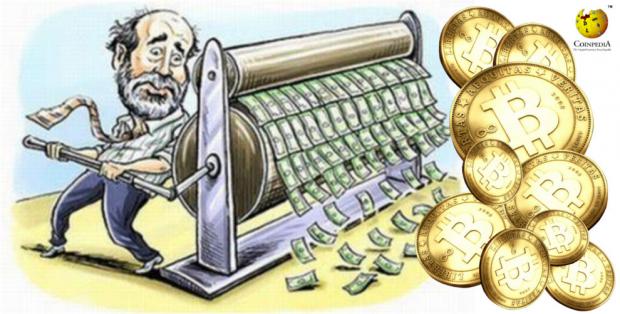
2019 saw the adoption of blockchain go through the roof, with many global economies figuring out regulations and announcing their own centrally-backed digital currencies. However, according to former U.S. Federal Reserve Chairman Alan Greenspan, there is no need for a digital currency issued by central banks at all.
Greenspan, who attended the Chinese finance magazine Caijing's annual Economic Outlook Conference, said that there was "no point for them to do it." The former Chairman noted that national currencies are backed by sovereign credit, something that no other organization could offer.
While talking about sovereign credit, Greenspan also took a shot at Facebook's Libra and said,
"The fundamental sovereign credit of the United States is far in excess of anything Facebook can imagine."
Libra entered the market with a bang. However, it could not resist regulatory pressures and its launch has since been postponed. Alas, the project did influence China, with the country now set to lead the blockchain revolution with its own central bank-issued digital currency.
Greenspan's views run contrary to the views of many banking officials across the world. Philadelphia's Federal Reserve President Patrick Harker for instance, claimed that central banks will issue their own digital currencies, calling it inevitable.