










Breaking News
 America's Wile E. Coyote Moment
 Guinness Pulls Plug On Baltimore Brewery As Costs Soar In Democrat-Run State Amid Consumer...
 Backlash Rolls In After Rutgers Womxns Rugby Name Change Welcomes Men Who Identify...
 Pentagon Raises Combat Pay For First Time Since 2002 As Iran War Persists
Top Tech News
 SHOCK CASE REPORT: Advanced Alzheimer's Patient Regains Speech, Memory, Mobility...
 Most artificial limbs rely on silicone or plastic to mimic human hands.
 Flying cell tower beams phone signal to Japan from 10 miles up
 Chinese Commercial Reactor Achieves Nuclear Fusion with Clean Hydrogen-Boron Fuel
 Med Beds Just Took a MASSIVE Step Forward, Healing People in Days!
 Palmer Luckey: Autonomous Weapons Are Ancient and Why Anduril Won't Build Humanoids | EP #295
 A laser just photographed objects through six feet of concrete
 Elon Musk's Next-Gen Motor Destroy Entire EV Industry
 China's disputed satellite refueling heralds new space war era
 BYD Will Put Solid-State Batteries In An EV Next Year: Executive



New psychedelic-like drug boosts the body's 'feel good' hormone WITHOUT hallucinations -
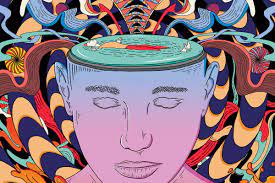
'AAZ-A-154' is an overlooked molecule that could provide mental health therapy
It stimulates receptors for serotonin, which mediates satisfaction and happiness
In trials on mice it produced rapid and 'long-lasting antidepressant-like effects'
A newly-identified 'psychedelic-like drug' doesn't cause hallucinogenic side effects, scientists reveal.
AAZ-A-154 is a 'previously unstudied' molecule that has the potential to act on beneficial pathways in the brain without causing hallucinations.
It stimulates receptors for serotonin – a key hormone sent between nerve cells in our brain that stabilises our mood, well-being and happiness.
In experiments on mice, AAZ-A-154 produced rapid and long-lasting antidepressant-like effects after a single dose, the US researchers found – and, if synthesised, could be an effective treatment for humans.
Psychedelic drugs have already shown promise for treating neuropsychiatric disorders such as depression and post-traumatic stress disorder (PTSD).
Researchers are now trying to identify alternative medications that offer the benefits of psychedelics without causing often distressing hallucinations.