










Breaking News
 The TERRIFYING Reason Peter Thiel Escaped the US
 Professor Jiang Breaks Down the Greater Israel Project
 Edward Snowden on Palestine and Sam Altman
 Palantir. IT'S WORSE Than You Think
Top Tech News
 Solar Panels Are Doing Something Nobody Expected
 DeLorean climbs skyward to race electric flying cars
 Atari's 800XL returns with a keyboard, cartridges and BASIC
 Bioinspired robot airdrops into remote waters via morphing wing-sail
 Anduril interceptor adapts to emerging threats via swappable stages
 I Built a Website to Expose Solar and Battery Scams
 Whistleblower Issues Dire Warning: Rogue AI, Hacking Nuclear Programs...
 Multi-material insulation delivers up to 10,000 x the stiffness
 Anduril's plan to save US sub edge from China's undersea surge
 Researchers Develop AI 'Mind-Reading' Tool That Reconstructs What Your Eyes See



United Airlines wants planes from Boom Supersonic to fly passengers faster than the speed of sound
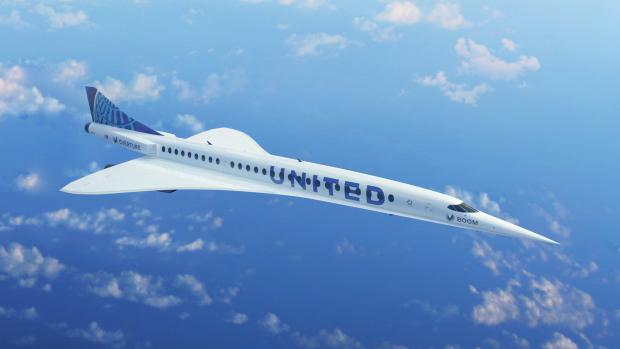
Earlier this month, the American air service giant said it has entered a commercial agreement with Boom to buy 15 "Overture" aircraft capable of flying faster than the speed of sound, as long as the new aircraft meet safety, operating and environmental sustainability requirements, according to United. Another 35 aircraft might be purchased, providing the first tranche goes to plan. No financial details were disclosed in a press release.
"This is an order, but to call it a firm order is inaccurate," Mike Leskinen, United's head of corporate development, told The Air Current. While money has exchanged bank accounts, Leskinen said the agreement is tied to certain milestones. "They [Boom] have to deliver, and we've got a number of years to deliver on that. We're going to work closely with them to help."
Boom has not yet tested a supersonic jet in flight, although in October 2020 the company promised it would fly its test XB-1 jet sometime in 2021. Once developed, Overture will send passengers from Paris to Montreal in only 3 hours and 45 minutes, about half the current metric of 7 hours and 15 minutes, according to Boom.
The net-zero aircraft will carry 65 to 88 passengers and cruise at 1.7 times the speed of sound at 60,000 feet (roughly 18.2 kilometers) in altitude. United says Overture will be ready for flight in 2026 and for carrying passengers in 2029.
United and Boom aren't the only ones interested in commercial supersonic flight. NASA is building its experimental X-59 Quiet Supersonic Transport jet to test technology for quieter sonic booms. Earlier this year, the space tourism company Virgin Galactic unveiled plans for a new Mach 3 aircraft for supersonic passenger travel.