










Breaking News
 The TERRIFYING Reason Peter Thiel Escaped the US
 Professor Jiang Breaks Down the Greater Israel Project
 Edward Snowden on Palestine and Sam Altman
 Palantir. IT'S WORSE Than You Think
Top Tech News
 Solar Panels Are Doing Something Nobody Expected
 DeLorean climbs skyward to race electric flying cars
 Atari's 800XL returns with a keyboard, cartridges and BASIC
 Bioinspired robot airdrops into remote waters via morphing wing-sail
 Anduril interceptor adapts to emerging threats via swappable stages
 I Built a Website to Expose Solar and Battery Scams
 Whistleblower Issues Dire Warning: Rogue AI, Hacking Nuclear Programs...
 Multi-material insulation delivers up to 10,000 x the stiffness
 Anduril's plan to save US sub edge from China's undersea surge
 Researchers Develop AI 'Mind-Reading' Tool That Reconstructs What Your Eyes See



Revolutionary Machine That Grows New Skin for Burn Patients Unveiled
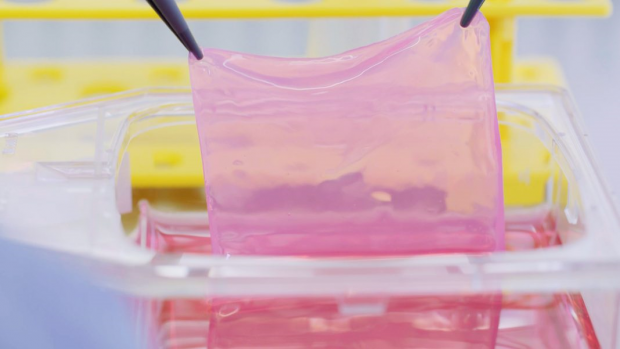
Neither totally real nor totally artificial, the new machine about the size of a coffee table allows skin to be stretched to much greater sizes in an effort to aid in the millions of people who suffer debilitating injury or death from burns.
Taking healthy, undamaged cutaneous skin cells from the victim, the procedure starts by "growing" them in a lab before combining them with hydrogel. The resulting 1mm inch thick skin is about the combined width of our natural skin layers.
The technology is called denovoGraft, and it's already being used to treat people even though it's only recently finishing phase II trials. That's because for a select few people, this method of skin crafting is so advanced, it's the only existing option in the world for their condition, which could be a rare illness or a significant burn.
"At the moment we can multiply the surface area of the original sample by a factor of 100, and we're aiming eventually for a factor of 500," said Daniela Marino, co-founder and director of denovoGraft's developers CUTISS.